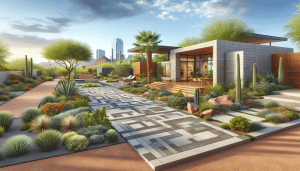
Let’s face it, trying to maintain a perfectly lush, green lawn here in Gilbert is basically a full-time job. You water it, you weed it, and then the July heat suddenly arrives, completely turning your backyard into a crispy brown sad-scape. Honestly, there is a much more enjoyable way to handle your outdoor space without constantly fighting the unforgiving desert sun.
So, What Actually Makes a Good Hardscape?
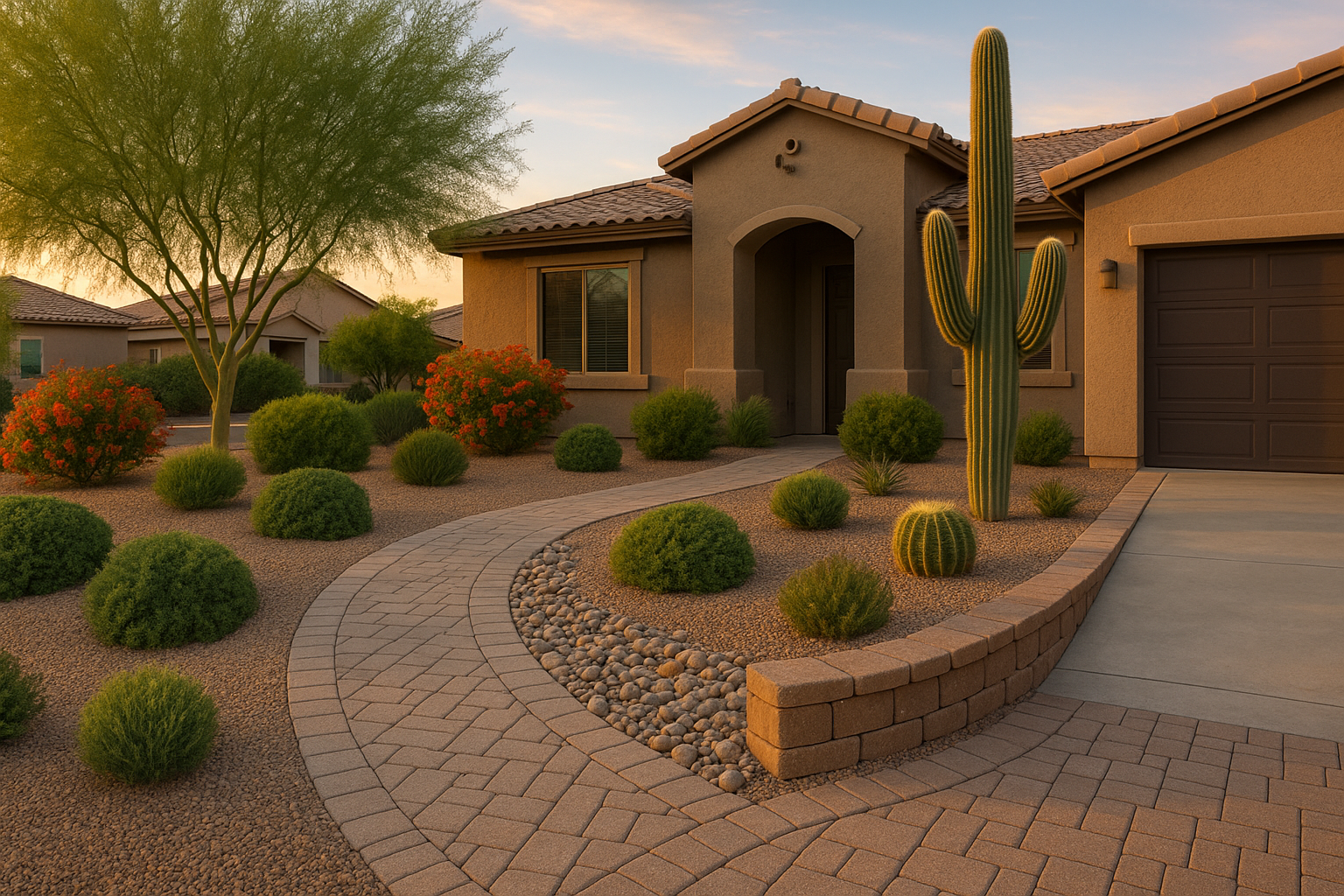
When people hear the word hardscaping, they sometimes picture a massive, barren expanse of gray concrete that looks more like a commercial parking lot than a cozy home. But that is not what we are talking about at all. Hardscaping is just the permanent, non-living framework of your yard. We are talking about custom paver patios, winding garden walkways, stone retaining walls, and built-in fire pits.
You know what? The real magic of garden hardscaping techniques is how they frame the living parts of your yard. By putting down solid, beautifully designed stone or brick surfaces, you create distinct zones. You give your garden structure. And frankly, you give yourself a place to actually sit and enjoy your property without getting your shoes muddy.
But creating a space that lasts through our blazing summers and sudden downpours takes more than just slapping some bricks on the dirt. There is a whole science behind the process. A beautifully laid patio looks simple on the surface, but the real work happens completely out of sight.
The Dirty Secret of a Perfect Patio (Let Me Explain the Base)
Here is the thing about Paver Installation. If your base is bad, your patio is bad. It really is that simple. You can buy the most expensive, gorgeous tumbled stone pavers from top-tier brands like Belgard, but if the ground underneath them is just loose dirt, they will shift, sink, and wobble within a year.
We see this all the time. A homeowner decides to save a few bucks with a quick weekend DIY project. They level out some sand, drop the stones on top, and call it a day. Next thing you know, the patio looks like a bumpy roller coaster.
To do it right, you have to dig. This is where the heavy lifting comes in.
- The excavation process: We usually dig down about seven to nine inches, depending on the soil. We have to get past the soft topsoil down to the harder earth.
- The aggregate base: Once the hole is dug, we fill it with something called Class 2 road base or ABC (Aggregate Base Course). This is a rough mixture of crushed gravel and rock dust.
- The compaction phase: We run a heavy vibratory plate compactor over the gravel, watering it down slightly as we go. The water helps the rock dust settle into the gaps between the gravel.
- The bedding sand: Finally, we spread a smooth, one-inch layer of screed sand right over the compacted gravel. We do not compact this sand. It acts as a soft cushion so the pavers can settle into place perfectly.
Think of it like making a really tough, rocky lasagna. Every single layer has to be packed down tight before you add the next one.
Pavers vs. Poured Concrete? It is Not Even a Fair Fight
We get asked about concrete all the time. Poured concrete is cheap. Well, actually, it is only cheap upfront. In the long run, poured concrete in Arizona is almost guaranteed to break your heart, and your wallet.
Our Gilbert soil has a lot of clay in it. When it rains, the soil swells up. When it bakes in the 115-degree heat, it shrinks and cracks. A giant, solid slab of monolithic concrete simply cannot flex with the moving ground. So, it cracks. And once concrete cracks, fixing it is an absolute nightmare. You usually have to tear the whole thing out.
Pavers, on the other hand, are individual units. They act like a flexible blanket over the ground. If the earth swells slightly, the pavers shift just a tiny fraction of an inch. You will never even notice. If a tree root happens to push up a section of your Gilbert AZ backyard patio five years from now, you just pull up those specific pavers, fix the root, and put the exact same stones back down.
| Feature | Poured Concrete Slab | Interlocking Paver System |
|---|---|---|
| Flexibility | Rigid. Cracks easily when the ground shifts. | Flexible. Moves with the soil without breaking. |
| Repairs | Very difficult. Patches are ugly and obvious. | Super easy. Just replace the affected stones. |
| Visual Appeal | Basic and flat. Fades into the background. | Highly customizable with colors and patterns. |
Sand That Acts Like Glue? Yeah, It is a Real Thing
Let’s talk about the joints. Once all the pavers are laid out in a beautiful herringbone or running bond pattern, there are thousands of tiny little gaps between them. In the old days, guys just swept regular play sand into these cracks. But weeds love regular sand. Ants love regular sand. And wind just blows it right out.
Today, experts use a brilliant product called polymeric sand. This stuff is incredible.
It looks and feels just like normal sand when you sweep it out of the bag. You brush it carefully over the entire surface, making sure it falls deep into every single crevice. Then, you lightly mist the whole patio with a garden hose.
When polymeric sand gets wet, the special polymers inside it activate. It hardens up like a flexible grout. It locks the pavers tightly together, making the whole surface incredibly strong. Plus, bugs cannot dig through it, and weed seeds cannot take root in it. It is one of those modern garden hardscaping techniques that completely changes the lifespan of an outdoor space.
Borders, Edges, and Keeping Everything from Sliding Away
You might be wondering what stops the pavers around the outside edge of the patio from just sliding away into the Grass. That is a great question.
Without a solid edge restraint, the outer bricks will slowly migrate outward over time, loosening the entire structure. There are a couple of ways professionals handle this.
- Plastic snap-edge restraints: These are heavy-duty L-shaped pieces of plastic that sit right up against the outside edge of the pavers. We drive ten-inch steel spikes through them straight into the compacted gravel base. They hold the patio together like a tight belt.
- Concrete toe edges: Sometimes, we trowel a wedge of wet concrete along the bottom edge of the outer pavers, locking them down completely. Once the landscaping dirt is pushed back against the patio, you never even see the concrete hidden below the surface.
Both methods work wonderfully, but picking the right one depends on your specific yard setup.
Let’s Talk About Water (Because Monsoons Are No Joke)
People from out of state always laugh when we talk about rain in Arizona. They think it is just a dry, endless desert. But if you live in Gilbert, you know exactly what happens in August. You smell the creosote in the air, the sky turns purple, and suddenly two inches of rain dumps on your house in twenty minutes.
If your yard is not prepared, that water will pool up right against your foundation, or turn your beautiful garden beds into a muddy swamp.
Good hardscaping actually helps manage this chaos. When we design an outdoor living space, we are secretly designing a water management system.
We grade every single patio so it drops about one-eighth of an inch for every foot of distance away from your house. It is totally invisible to the naked eye. You will never feel like you are sitting on a slope. But when the monsoon hits, gravity pulls that sheet of water safely away from your back door and directs it toward the street or a proper drainage area.
Sometimes, we even install permeable pavers. These have slightly larger gaps designed specifically to let rainwater pass straight through the surface and soak back into the earth naturally. They are brilliant for dealing with heavy localized flooding.
Fire Pits, Seating Walls, and Making Your Yard Actually Usable
Once the flat work is done, that is when the fun vertical stuff begins. A flat patio is great, but adding vertical elements makes the space feel like an actual room.
Building a seating wall around the edge of a patio gives you tons of permanent seating for parties, without cluttering the space with clunky outdoor furniture. We build these out of heavy, textured wall blocks, stacking them carefully and locking them together with heavy-duty structural adhesive.
And a custom built-in Fire Pit? There is absolutely nothing better on a crisp November evening in Arizona. We can build them for traditional wood burning, or pipe in natural gas for a clean, instant flame. The trick to a good fire pit is the inner lining. We always use thick steel rings or specialized firebrick inside the pit to protect the outer decorative stones from cracking under the intense heat.
Ready to Kick the Mud to the Curb?
Creating a stunning, low-maintenance outdoor space is entirely possible, but you really do need a team that understands exactly how to handle the unique soil and weather challenges we have right here in town. You do not have to spend another weekend pulling weeds out of a dying lawn or trying to scrub mud off your patio furniture.
If you are tired of looking out your back window and feeling disappointed, we can help fix that. The team at Gilbert Paver Company knows exactly how to build beautiful, rock-solid hardscapes that will last for decades.
Whether you want a simple, elegant walkway through your garden or a massive outdoor entertaining area with a seating wall and a fire pit, we have got you covered.
Let’s build something incredible together. Reach out to us today to start planning your new backyard. Give us a call directly at 480-534-9680 to talk about your ideas, or easily [Request a Free Quote] on our website so we can come take a look at your property. Your perfect yard is just a phone call away.