
Materials
Travertine Pavers in Gilbert, AZ
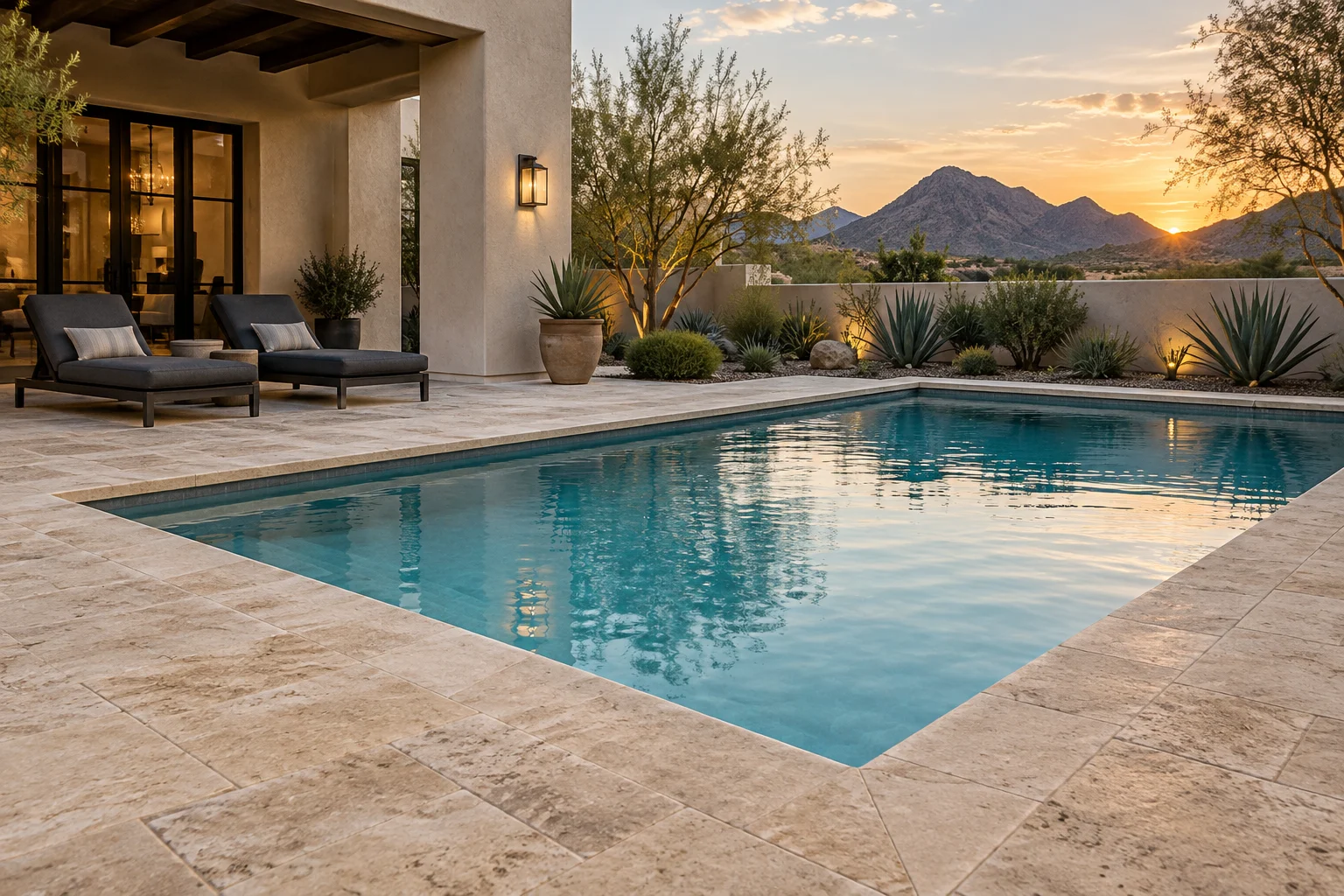
Soft mineral tones and a naturally varied surface. Travertine can give a patio or pool surround a quietly architectural feel.
Consider the details
Travertine variation, exterior suitability and care.
Soft mineral tones and a naturally varied surface. Travertine can give a patio or pool surround a quietly architectural feel.
Choose by finish, not appearance alone
Travertine is a natural stone with variation and pores. Filled versus unfilled surfaces, finish, thickness and product grade affect suitability. Compare actual samples for texture, comfort and care.
- Check product suitability for poolside use
- Plan coping and adjoining surface transitions
- Avoid acidic cleaners unless expressly permitted by the manufacturer
See it in the space
View several travertine units to understand voids, color variation and texture. Compare the finish and coping profile at full size where possible; a small display tile does not describe every detail of the exterior installation.
Plan care before installation
Ask the stone supplier for the recommended cleaning method and whether an impregnating treatment is appropriate. Discuss acid sensitivity, spill care and the finish objective before choosing a product.
Understand the stone behind the name
Travertine is a form of limestone with characteristic mineral variation and voids. Color names do not establish a stone's density, grade or outdoor suitability. Compare the actual supplier selection, thickness, surface finish and whether the units are filled or unfilled. A showroom tile and an exterior paving unit may have different intended uses. The specification should describe the product, not just say travertine.
Coordinate the surface and pool edge
Travertine's soft tones can work well with a restrained poolside palette, but the chosen surface and edge must fit the installation. Review coping shapes and transitions beside the deck samples. A tumbled or textured appearance does not make a surface slip-proof, and sun exposure can still make stone hot. Ask for outdoor application guidance and inspect representative samples in the conditions the space will experience.
Choose compatible cleaning and protection
The Natural Stone Institute identifies limestone and travertine as calcium-carbonate-based stones vulnerable to acids. Vinegar and ordinary acidic patio cleaners are not safe default choices. Follow stone-specific care guidance and test any treatment. If an impregnator is recommended, understand that it is for stain resistance, not a promise that spills cannot stain or etch. Product care should be discussed before installation rather than after the first cleaning problem.
Product and planning references
Natural Stone Institute: limestone and travertine ↗Natural Stone Institute: stone care and cleaning ↗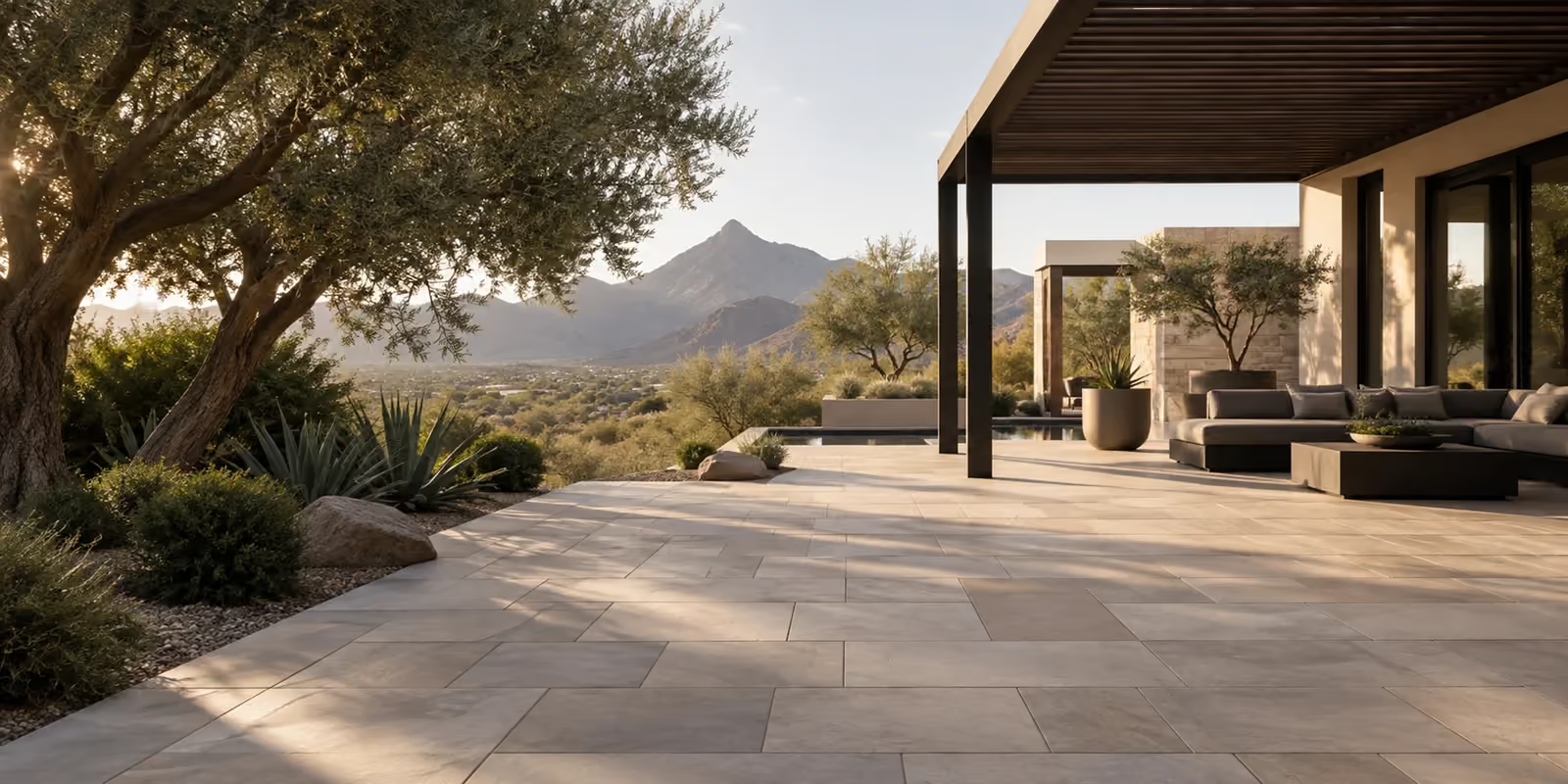
Bring the space together
Look at the whole composition: surface, architecture, planting and the places you want to spend time.
Illustrated design inspiration, not completed-project photography.Questions worth asking
Before the project begins.
Is travertine a type of marble?
Travertine is a type of limestone, despite the sometimes-used trade phrase travertine marble. Its natural variation, voids and acid sensitivity should inform product selection and care.
Can travertine pavers be used for vehicle traffic?
Only where the specific stone product and installation assembly are suitable for the proposed loading. Patio suitability does not establish driveway suitability. Request the relevant supplier and installation documentation.
Is filled travertine always better than unfilled?
Neither label settles the choice. Finish, void size, fill quality, thickness, exposure and intended use all matter. Review the actual sample and exterior-use guidance with the supplier.
Keep exploring
Connected decisions.
A good place to begin
Make room for
something beautiful.
Share your space, your ideas and the work you have in mind. Start with a project-specific conversation.
Request a free quote