
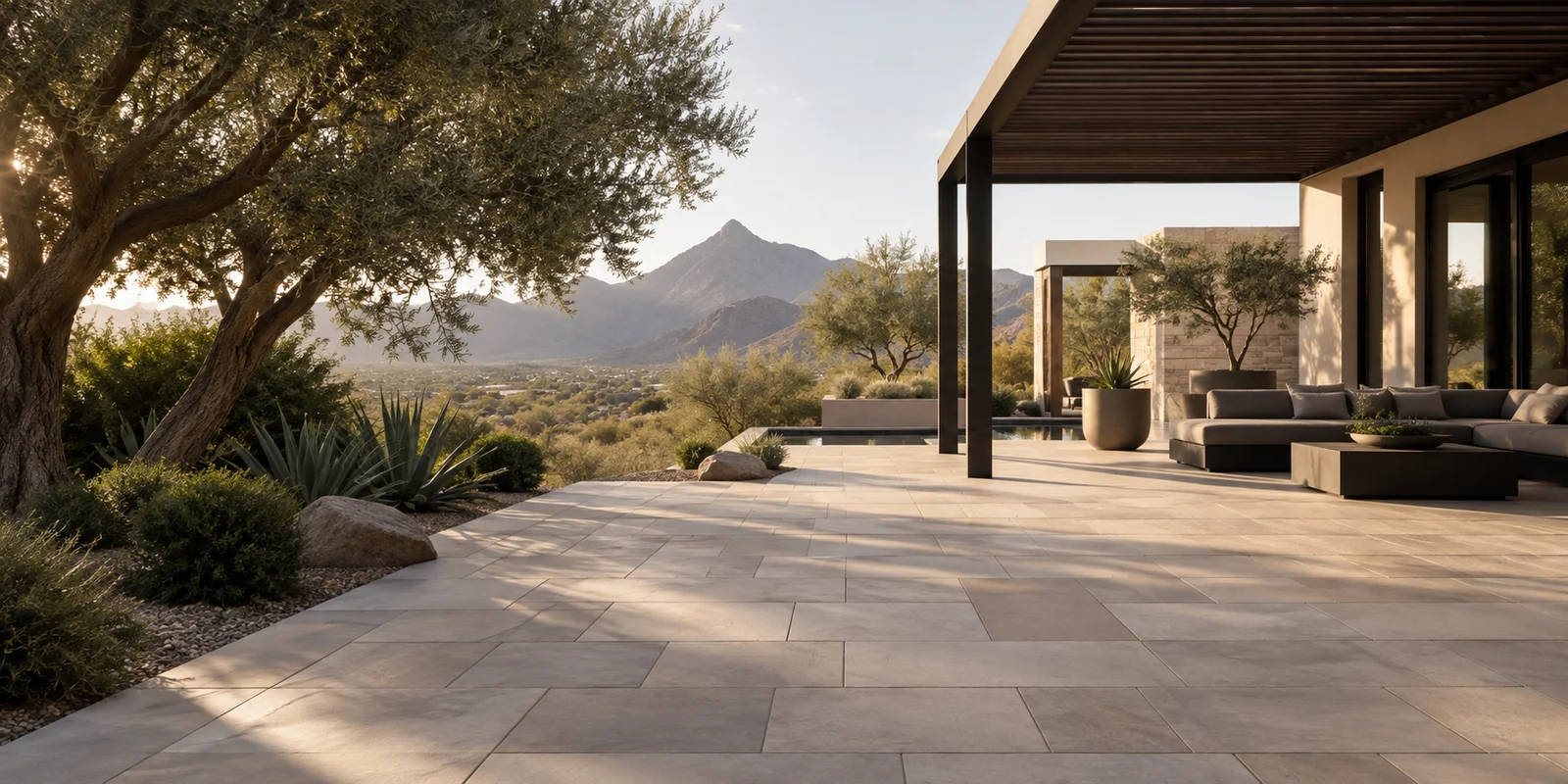
Installation
Paver Design & Installation in Gilbert, AZ
A beautiful surface starts well below the surface. Bring the layout, material and foundation together before the first paver is laid.
Consider the details
Design, preparation and a clear installation scope.
A beautiful surface starts well below the surface. Bring the layout, material and foundation together before the first paver is laid.
Design for the way you live outside
Start with how the space will be used. Dining, parking, pool access and quiet seating each place different demands on the layout. A good plan connects those areas without crowding them.
- Measure usable space, not just total square footage.
- Plan doors, gates, furniture and circulation together.
- Choose a material and finish appropriate for the intended use.
Preparation is part of the finished result
Excavation, base selection, compaction, grading and edge restraint affect how the paving performs over time. The required system depends on the ground, drainage and whether the area carries vehicles.
New installation or existing-surface renovation?
Replacing a slab and installing over a suitable existing slab are different projects. Cracking, drainage, clearance at doors and the condition of the original concrete determine whether an overlay is appropriate. Ask for that assessment before comparing estimates.
Read the site before drawing the pattern
Before choosing pavers, identify the current finish and measure the door thresholds, gates, drains and adjoining surfaces. Photograph any pooling after rain and note routes needed for bins, furniture or equipment. A design that looks good in plan can still create a step at a doorway or block a gate. Confirm the finished elevations and where water will discharge before excavation or material ordering.
Understand what an installation includes
A sand-set interlocking pavement usually combines prepared ground, a compacted base, a bedding layer, paving units, joints and edge restraints. Each part has a job; extra bedding material is not a substitute for repairing an unstable base. Thickness and materials must be selected for the actual loading and ground conditions. Natural stone, porcelain and bonded systems may call for different details, so one generic installation recipe does not cover every product.
Put the scope on paper
The estimate should distinguish lifting existing pavers, demolishing concrete and starting on unpaved ground. Ask who handles disposal, access protection, irrigation conflicts and any drainage adjustments. Specify the product, pattern, border, joint material and replacement allowance, including spare units for future repairs. Where an overlay is proposed, ask what makes the existing slab suitable. Agree on exclusions and any specialist work before comparing the finished price.
Product and planning references
CMHA: concrete-paver overlay guide specification ↗MSI: Arterra porcelain installation guidelines ↗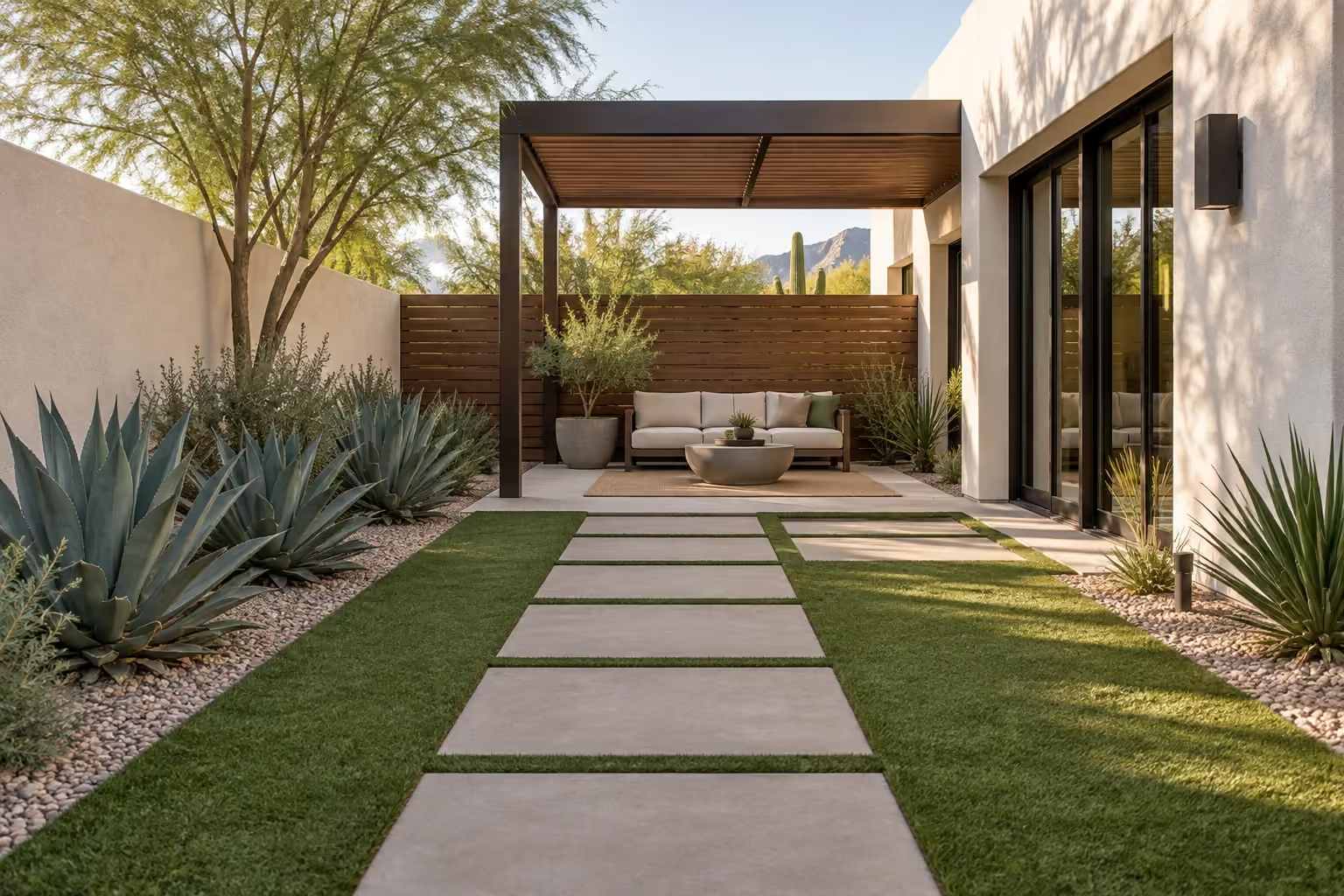
Bring the space together
Look at the whole composition: surface, architecture, planting and the places you want to spend time.
Illustrated design inspiration, not completed-project photography.Questions worth asking
Before the project begins.
What belongs in a paver estimate?
Look for the measured area, selected product, removal and preparation scope, drainage work, edging, joint material and cleanup. Scope differences matter as much as the quoted total.
Can every paver be used on a driveway?
No. Product thickness, installation method and manufacturer-rated use must suit vehicle loading. Select the complete system, not only the color.
How do I prepare for an installation estimate?
Measure the approximate area and describe its current surface, intended use and access. Mention drains, gates and level changes in Project Details. Final measurements, product suitability and excavation requirements need a site assessment.
Is an overlay the same as a new installation?
No. An overlay uses an existing supporting surface; a new sand-set installation normally requires ground and base preparation. Each has different elevation, drainage, joint and product requirements.
Keep exploring
Connected decisions.
A good place to begin
Make room for
something beautiful.
Share your space, your ideas and the work you have in mind. Start with a project-specific conversation.
Request a free quote