
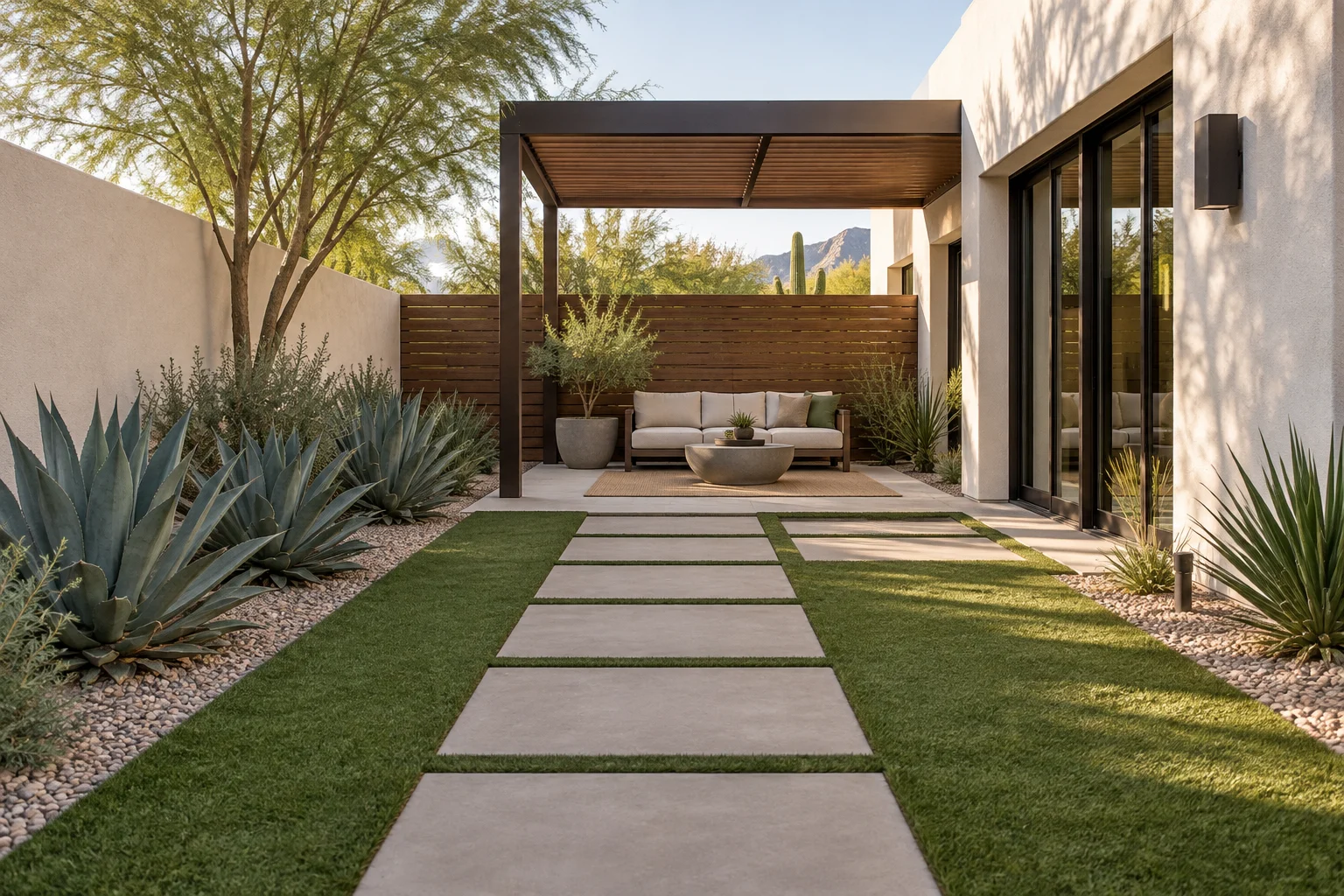
Walkways
Walkway Pavers in Gilbert, AZ
The route to your door should feel as considered as the home itself.
Consider the details
A front walk that works for everyday access.
The route to your door should feel as considered as the home itself.
Start at the entrance
Connect parking, gates and the front door with a direct, comfortable route. Width and turning space should reflect everyday use, not only the available strip of ground.
Plan the route and clear width
Check the journey from the driveway or gate to the entrance with doors open and everyday items in hand. A clear walkway should accommodate the way it is used, including bins, strollers or mobility equipment where relevant. Measure the usable route between planting, borders and walls, not merely the strip of paving. Changes in width and direction deserve attention before the layout is fixed.
Handle thresholds and changes in level
Finished paving should meet doorways and adjoining surfaces deliberately. An unplanned lip at an entrance can create a trip problem, while an overly high finish can interfere with drainage or the door. Where steps or an accessible route are involved, include the applicable design requirements rather than assuming ordinary patio details suffice. Look at water coming from roofs, irrigation and adjoining beds.
Keep the entrance visually simple
A modest walkway usually benefits from a restrained pattern that relates to the driveway or house. Large units can produce awkward cuts in a narrow route; small units create more joints. Compare both at the actual width. Ask how the perimeter will be restrained, how lighting or irrigation access will be preserved and how a damaged unit could be replaced later.
Product and planning references
CMHA: concrete-paver overlay guide specification ↗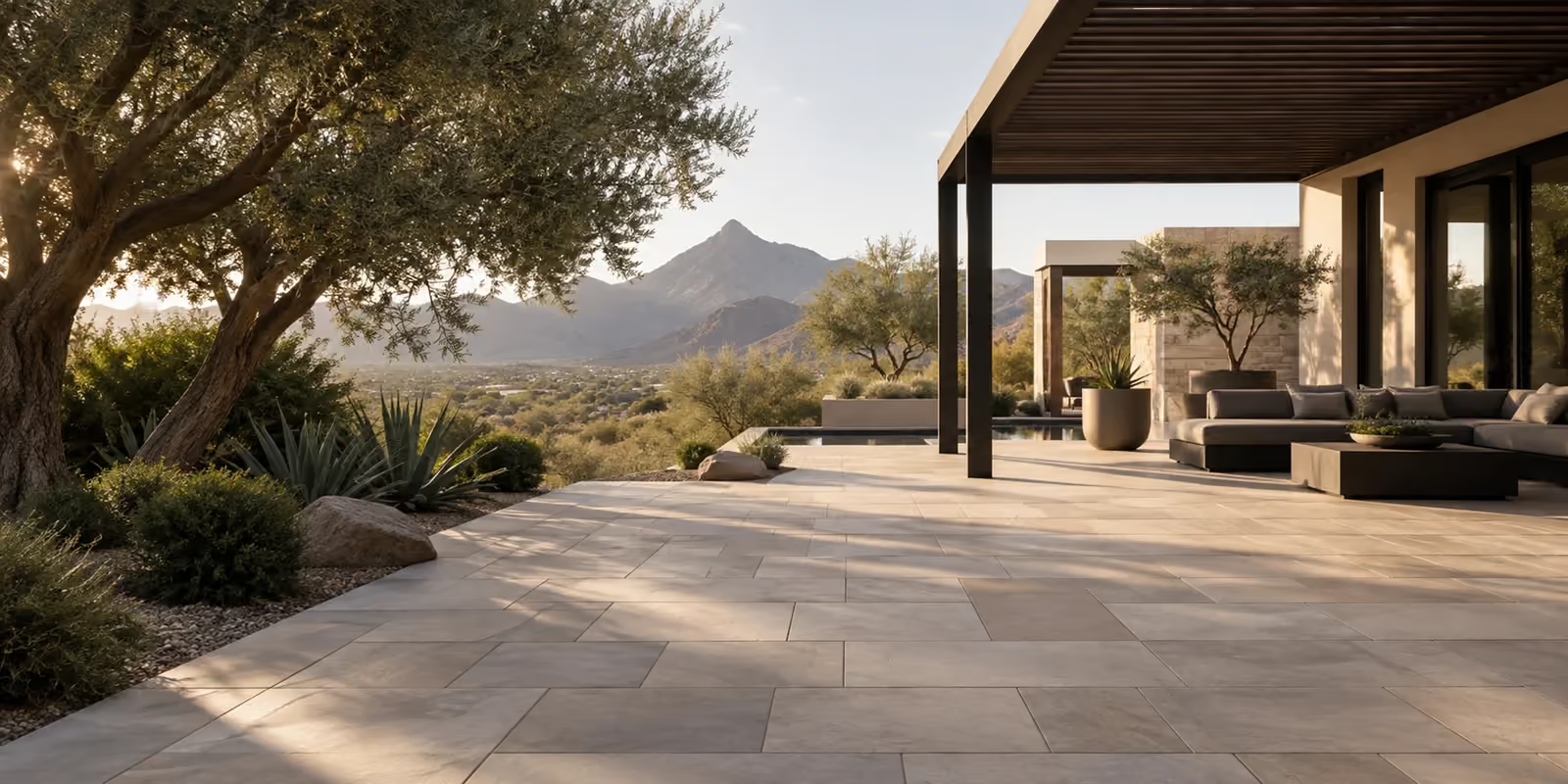
Bring the space together
Look at the whole composition: surface, architecture, planting and the places you want to spend time.
Illustrated design inspiration, not completed-project photography.Questions worth asking
Before the project begins.
How is a walkway different from a garden path?
A front walkway usually provides regular access to the home and needs continuous, usable footing. A garden path may be a secondary route with stepping units. Choose the arrangement for the users and frequency of use.
Can a walkway be widened?
Often, but the additional area needs suitable support, edge details and drainage. Consider material matching and thresholds, and review any property or access requirements before extending.
Keep exploring
Connected decisions.
A good place to begin
Make room for
something beautiful.
Share your space, your ideas and the work you have in mind. Start with a project-specific conversation.
Request a free quote