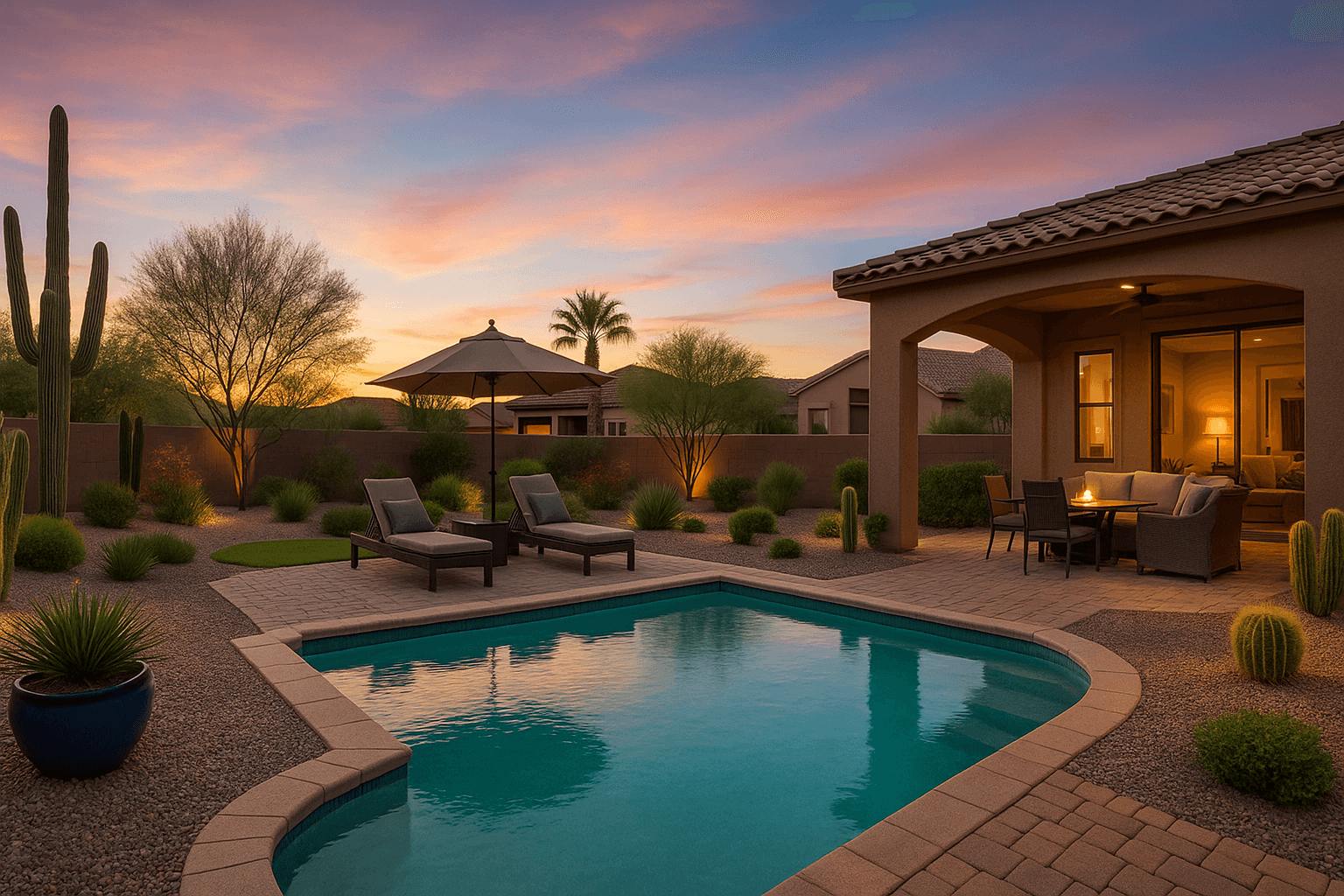
Living in Gilbert means we cherish those evening hours when the sun finally dips below the horizon and the heat breaks. It’s that golden time when your backyard should be an oasis, not just a patch of dry Grass or cracked concrete that’s seen better days. Honestly, upgrading your space is about reclaiming your home’s footprint and finally enjoying the weather we put up with all summer.
Contents
- 1 Why Hardscapes Beat Grass in the Valley
- 2 The Battle of Materials: Pavers vs. Concrete vs. Travertine
- 3 Creating Zones for Entertainment
- 4 The Technical Stuff: It’s What’s Underneath That Counts
- 5 Bringing the Kitchen Outside
- 6 Softening the Hardscape
- 7 Is It Worth the Investment?
- 8 Ready to Transform Your Backyard?
Why Hardscapes Beat Grass in the Valley
Let’s be real for a second—keeping a lush green lawn alive in Arizona is a full-time job. You’re fighting the heat, the water bill, and the constant need to mow when it’s 105 degrees outside. It’s exhausting. This is exactly why so many homeowners in the East Valley are making the switch to custom hardscaping.
It’s not just about getting rid of the chores, though. It’s about functionality. When you install a paver patio or a travertine pool deck, you are essentially adding square footage to your house. It becomes an outdoor room. You know what? It changes how you interact with your home. instead of looking out the window at a yard you have to maintain, you step out into a space you actually want to use.
There is a bit of a misconception that “hardscape” means just pouring some concrete and calling it a day. But that’s cold, industrial, and prone to cracking. We’re talking about elegant design elements that blend texture, color, and structure.
The Battle of Materials: Pavers vs. Concrete vs. Travertine
If you’ve ever walked barefoot on a concrete slab in July, you know the pain I’m talking about. It holds heat like a cast-iron skillet. That’s one of the main reasons we steer folks toward materials that are better suited for our climate.
Here’s the thing about standard concrete: the soil in Gilbert is often clay-heavy. When it gets wet, it expands; when it dries, it shrinks. This movement wreaks havoc on rigid slabs, leading to those unsightly cracks you see in driveways everywhere.
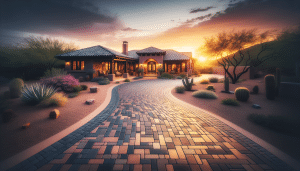
Interlocking pavers work differently. Because they are individual units held together by friction and joint sand, they have a “flexible pavement system.” If the earth moves, the pavers move slightly with it rather than snapping. Plus, if one gets damaged (maybe you dropped a heavy dumbbell or spilled oil that won’t come out), you just pop that one brick out and replace it. Try doing that with a concrete slab.
Then there is travertine. This is the premium choice for a reason. It’s a natural sedimentary rock that stays surprisingly cool to the touch, even in direct sunlight. If you have a pool, this is practically non-negotiable for saving your feet from burns.
| Material | Heat Retention | Durability & Maintenance | Aesthetic Appeal |
|---|---|---|---|
| Concrete Slab | High (Very Hot) | Prone to cracking; hard to repair | Basic, industrial |
| Concrete Pavers | Moderate | High; easy to spot-repair | Versatile patterns & colors |
| Travertine | Low (Cool Touch) | Very High; timeless longevity | Natural, luxurious, elegant |
Creating Zones for Entertainment
A big mistake I see with DIY projects is just creating one giant flat square. It looks like a parking lot. Professional landscape design is about creating “zones.” You want a flow.
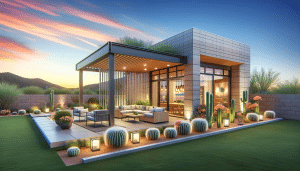
Think about the inside of your house. You have a kitchen, a dining area, and a living room. Your backyard needs the same logic. You might have a dining area closer to the back door for easy food transport, and then a Fire Pit lounge set further back in the yard to draw people out.
Speaking of fire pits, they are crucial for Gilbert winters. I know, outsiders think it’s hot here year-round, but once the sun goes down in January, it gets chilly. A built-in gas fire pit or a rustic wood-burning setup creates a natural gathering spot. It’s primal; people just naturally circle around a fire.
And while we are on the topic of zoning, don’t forget the vertical elements. Retaining walls and seat walls aren’t just functional for holding back soil; they provide built-in seating for parties so you don’t have to drag out twenty folding chairs.
The Technical Stuff: It’s What’s Underneath That Counts
I’ll admit, this part isn’t sexy. Nobody invites their neighbors over to look at the aggregate sub-base. But if you skip this part, your beautiful new patio will look like a rollercoaster in two years.
The longevity of any hardscape project is 90% in the preparation. We have to excavate the native soil—which, as mentioned, can be tricky clay—and replace it with a layer of crushed rock (road base). This gets compacted with heavy machinery until it’s rock hard.
Then comes the bedding sand. This is what the pavers actually sit on. It allows for leveling and fine-tuning.
If you hire a “guy with a truck” who quotes you half the price, this is usually where they cut corners. They might throw pavers directly on the dirt. It looks fine for a month. Then the first monsoon hits, the water settles, the ground sinks, and suddenly you have a puddle in the middle of your patio and weeds growing through the cracks.
Proper drainage and grading are essential. We need to slope the patio away from your home’s foundation. You’d be surprised how many DIY jobs end up funneling rainwater right into the living room sliding door.
Bringing the Kitchen Outside
We live in the BBQ capital of the world (okay, maybe that’s debatable, but we sure grill a lot). Standalone grills are fine, but building them into a masonry structure changes the game.
An outdoor kitchen doesn’t have to be massive. It can just be a built-in grill with some counter space for prep. Having a spot to set down the platter of burgers or chop veggies without running back inside makes the whole cooking process less stressful.
If you want to go all out, you add a bar fridge, a sink, or even a pizza oven. The key is to match the materials of the kitchen structure—usually stacked stone or stucco—to the rest of the hardscape design and your home’s architecture. It makes it look like it was part of the original build, not an afterthought slapped together on a weekend.
Softening the Hardscape
Okay, I’ve been talking a lot about stone and rock. But you can’t have only stone. That’s called a prison yard. You need to soften the edges.
This is where the contrast comes in. Imagine a sleek, geometric paver walkway flanked by soft, flowing ornamental grasses or agave. The contrast between the rigid, man-made stone and the organic shapes of the plants is what creates that “magazine look.”
We often use synthetic turf in between paver stepping stones or as a border. It gives you that pop of green without the water bill we talked about earlier. Or, using river rock borders to facilitate drainage while adding a different texture.
Lighting is the final touch. You can have the most expensive stone in the world, but if it’s pitch black at night, who cares? Low-voltage landscape lighting tucked under the lip of a seat wall or highlighting a walkway adds safety and ambiance. It creates shadows and depth that make the yard look bigger than it actually is.
Is It Worth the Investment?
Let’s talk brass tacks. Is dumping money into your backyard worth it?
In a market like Gilbert, absolutely. Outdoor living space is high on the priority list for buyers. If you ever decide to sell, a well-executed backyard hardscape is a massive selling point. It’s right up there with a renovated kitchen.
But even if you’re staying put forever (and why wouldn’t you?), the Return on Investment isn’t just financial. It’s lifestyle. It’s having a place to host Thanksgiving dinner outside. It’s drinking your coffee on a cool Saturday morning on a patio that doesn’t wobble.
Cheap materials and poor installation cost more in the long run because you end up re-doing them. Doing it right with quality pavers or travertine means you do it once.
Ready to Transform Your Backyard?
Look, you can keep staring at that patch of dirt, or you can turn it into the favorite room of your house. We know the soil, the climate, and the style that works best in Gilbert because this is our home too.
Whether you want a sprawling entertainment deck or a cozy fire pit nook, we handle the heavy lifting—literally.
Let’s get your project started.
Call us today at 480-534-9680
Or click here to Request a Free Quote