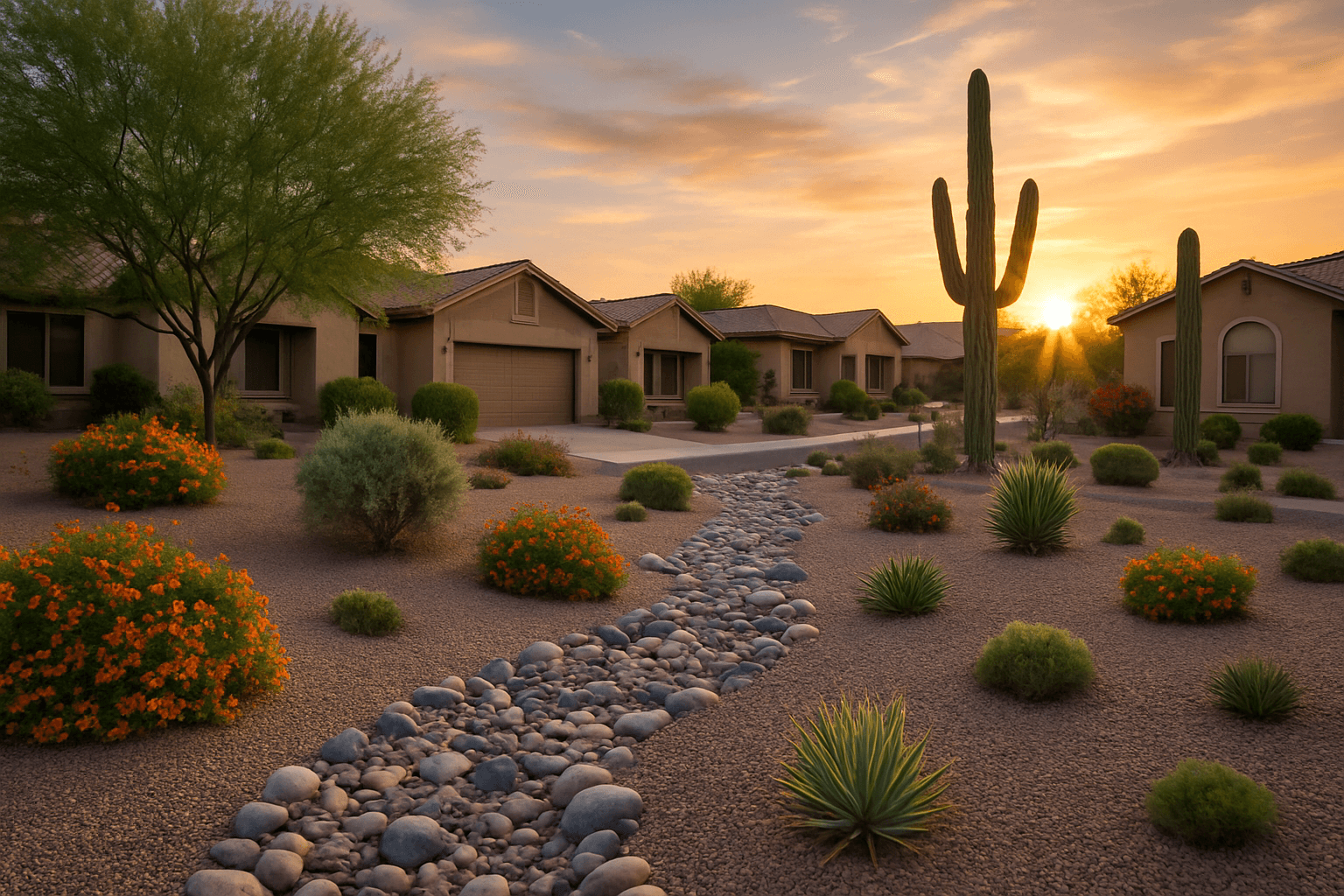
Let’s be honest for a second—keeping a lawn green in Gilbert is a full-time job that nobody really applied for. You look out the window in July, the thermometer is pushing 110 degrees, and you’re watching your sprinkler system practically throwing money into the air just to keep that Bermuda Grass on life support. It’s a struggle, isn’t it?
Contents
- 1 Wait, isn’t plastic supposed to be bad for the planet?
- 2 The Elephant in the Room: Water Conservation
- 3 Cutting Out the Chemicals
- 4 The Carbon Footprint of Mowing
- 5 Comparing the Impact
- 6 Is it really “Green” if it doesn’t cool the air?
- 7 Durability Reduces Waste
- 8 It’s About Quality of Life, Too
- 9 Making the Right Choice for Gilbert
- 10 Ready to Ditch the Mower?
Wait, isn’t plastic supposed to be bad for the planet?
I know what you’re thinking. It feels a little contradictory, right? We’ve been told for years to reduce our plastic use, ditch the straws, and bring our own bags to the grocery store. So, how in the world does covering your yard in Artificial Turf actually help the environment?
It’s a valid question. Honestly, if you asked me ten years ago, I might have been skeptical too. But the landscaping game has changed, especially here in the desert. The environmental impact of a landscape isn’t just about what material it’s made of; it’s about what it consumes over its lifetime.
When you look at the sheer amount of resources natural grass demands—water, gasoline, fertilizers, pesticides—the math starts to look a lot different. In the arid climate of Arizona, sustainable landscaping isn’t just a buzzword; it’s a necessity. And surprisingly, synthetic grass is leading the charge in a way that actually makes sense for our ecosystem.
The Elephant in the Room: Water Conservation
Let’s talk about water. In Gilbert, water isn’t just a utility; it’s a precious commodity.
Did you know that the average homeowner with a natural grass lawn uses tens of thousands of gallons of water every year just on irrigation? Depending on the size of your lot, we are talking about 55 gallons of water per square foot annually. That is a staggering amount of H2O just to keep the HOA off your back.
Here’s the thing—artificial turf requires zero watering.
Okay, maybe you hose it down once in a blue moon if the dog makes a mess or if it gets dusty during a haboob, but that’s it. By making the switch, you are instantly:
- Saving thousands of gallons of fresh water every single year.
- Reducing the strain on Arizona’s reservoirs.
- lowering your monthly water bill significantly.
It’s one of the few home improvements where you can actually see the environmental benefit on your bank statement. It’s a direct correlation. You stop watering, you save water. Simple as that.
Cutting Out the Chemicals
There is a smell that reminds me of Saturday mornings in the suburbs. It’s that sharp, chemical scent of fertilizer or weed killer. We don’t really think about it much, but to keep natural grass looking like a golf course, you have to pump it full of chemicals.
We’re talking about nitrogen-heavy fertilizers to make it green and herbicides to kill the weeds that inevitably pop up.
Where do those chemicals go? They don’t just stay on the grass blades. When you water the lawn (or when we get those rare, intense monsoon rains), that chemical cocktail creates toxic runoff. It seeps into the groundwater or washes into storm drains.
With artificial turf installations, you eliminate the need for:
- Fertilizers: It stays green without chemical help.
- Pesticides: Bugs don’t eat plastic.
- Herbicides: Weeds have a incredibly hard time growing through the backing (especially if the base prep is done right).
You’re creating a safer environment for your kids and pets to roll around in. You know, without worrying about that little yellow flag the lawn care guys stick in the ground warning you to stay off the grass.
The Carbon Footprint of Mowing
I have a love-hate relationship with lawnmowers. Mostly hate. They are loud, they smell like exhaust, and they are surprisingly dirty machines.
According to the EPA, a standard gas-powered lawnmower emits as much pollution in one hour as driving a car for about 45 miles. And that’s just one hour. Multiply that by every weekend, for every house on the block, for years. That is a massive amount of carbon emissions just for a manicured lawn.
And let’s not forget the other equipment. String trimmers, edgers, leaf blowers—they all add up.
Synthetic turf is the ultimate “set it and forget it” solution. No mowing. No gas cans in the garage. No engine maintenance. You aren’t burning fossil fuels to maintain your yard. You’re just enjoying it.
Comparing the Impact
Sometimes it helps to see it laid out side-by-side. It’s not just about aesthetics; it’s about the long-term “cost” to the environment.
| Feature | Natural Grass (Arizona) | Artificial Turf |
|---|---|---|
| Water Usage | High (50,000+ gallons/year) | Negligible (Cleaning only) |
| Chemical Runoff | High (Fertilizers/Pesticides) | None |
| Carbon Emissions | High (Mowers/Blowers) | Zero (Maintenance-free) |
| Lifespan | Indefinite (but requires reseeding) | 15–20+ Years |
| Recyclability | Compostable | Recyclable (Depending on type) |
Is it really “Green” if it doesn’t cool the air?
This is a fair point that critics often bring up. Natural grass does have a cooling effect because of transpiration (basically, plants sweating). Artificial turf doesn’t do that. In fact, under the direct Gilbert sun, synthetic grass can get hot.
However, the industry hasn’t been sleeping on this issue.
Modern turf technology has come a long way from the scratchy stuff you played on in high school. We now use advanced infill systems—that’s the sand or material brushed in between the blades—that are designed to retain moisture and keep the surface temperature down.
There are also specialized “cool yarns” designed to reflect UV rays rather than absorb them.
Plus, you have to weigh the trade-off. Is the slight cooling effect of natural grass worth the massive water consumption required to sustain it in a desert? For most environmentally conscious homeowners here in the valley, the answer is shifting toward conservation.
Durability Reduces Waste
You might wonder about the landfill issue. “Won’t this carpet just end up in the dump eventually?”
It’s a valid concern. But let’s look at the timeline. A high-quality turf installation from a reputable installer (like us) is built to last 15 to 20 years. That is two decades of water savings and zero emissions.
In contrast, maintaining a natural lawn often involves laying down new sod every few years when the summer heat inevitably kills patches of it. Sod farming is an intense agricultural process that strips topsoil and uses heavy machinery.
By installing a product that lasts for decades, you are reducing the constant cycle of consumption. And the technology for recycling artificial turf is improving every year. By the time your lawn needs replacing in 2040, the recycling infrastructure will be even more advanced than it is today.
It’s About Quality of Life, Too
Sustainability isn’t just about carbon and water; it’s about sustainable living for you.
How much of your weekend do you want to spend pushing a mower in 100-degree heat? There is a mental cost to maintaining a landscape that is constantly trying to die on you.
With artificial turf, your yard is always ready.
- Want to host a BBQ on a Tuesday? The grass is perfect.
- Kids want to play tag? No mud, no grass stains.
- Dog needs to go out? The drainage systems we use today are incredibly efficient.
You gain back time. And frankly, time is the one resource we can’t make more of. Using that time to relax rather than fight with a sprinkler timer seems like a pretty sustainable choice for your mental health, if you ask me.
Making the Right Choice for Gilbert
Look, I’m not saying plastic grass is a magic bullet that fixes the climate. But when you contextualize it for Gilbert, AZ, it is hands down the most responsible choice for a functional backyard.
We live in a desert. We are running a deficit on water. We have an abundance of sunshine. It makes sense to adapt our living spaces to the reality of our environment.
By choosing sustainable landscaping options like artificial turf, you are aligning your home with the local ecology. You’re acknowledging that maybe, just maybe, the English country garden look isn’t what nature intended for Arizona—and that’s okay.
We can still have beautiful, lush, green spaces. We just achieve them differently now.
Ready to Ditch the Mower?
If you’re tired of the brown patches, the high water bills, and the guilt of watering your lawn while the rest of the state talks about drought, it might be time to make a change.
At Gilbert Paver Company, we don’t just roll out a carpet and call it a day. We specialize in designing high-quality, realistic turf installations that blend perfectly with pavers and hardscapes to create a backyard you’ll actually want to use.
Let’s talk about how we can transform your yard into an eco-friendly oasis.
Contact Us today to get started:
→ Call us at: 480-534-9680
→ Or simply: Request a Free Quote