You pull up to your house after a long day in the heat, and what greets you? Just a cracked, sun-faded slab of concrete that looks exactly like every other Driveway on the block. It’s time to fix that first impression with something that actually makes you smile every time you come home.
Contents
- 1 Why Your Driveway is More Than Just a Parking Spot
- 2 Breaking the Mold: It’s All About the Pattern
- 3 Let’s Talk About Heat (Because We Live in Arizona)
- 4 Texture and Color: Mixing It Up
- 5 The “Welcome Mat” Effect: Walkways and Porches
- 6 The Technical Stuff (That You Don’t Have To Worry About)
- 7 Lighting the Way
- 8 Is It High Maintenance?
- 9 Making the Change
- 10 Ready to Transform Your Home?
Why Your Driveway is More Than Just a Parking Spot
Here’s the thing about living in Gilbert: we have beautiful homes, but there is a bit of a “sea of beige” going on with all the stucco. You know what I mean? It’s easy for houses to blend together. Honestly, your driveway and front walkway are the handshake of your home. They are the first things guests see, and they set the tone for everything else.
Replacing standard concrete with custom pavers isn’t just about vanity, though. It’s a smart financial move. Real estate agents talk about curb appeal constantly because it works. A well-designed paver driveway can significantly bump up your property value. It signals that the home is well-cared for. Plus, let’s be real—concrete cracks. The ground here shifts, the heat expands everything, and eventually, that solid slab snaps. Pavers are different. They have a little “give” because of the joints, making them much more forgiving in our desert climate.
Breaking the Mold: It’s All About the Pattern
When people think of pavers, they sometimes just picture red bricks in a straight line. But that’s old school. Modern paver designs are more like art for your yard. The way we lay the stones—the pattern—changes the structural integrity and the vibe of the space.
Let me explain a few of the heavy hitters in the design world right now:
The Herringbone
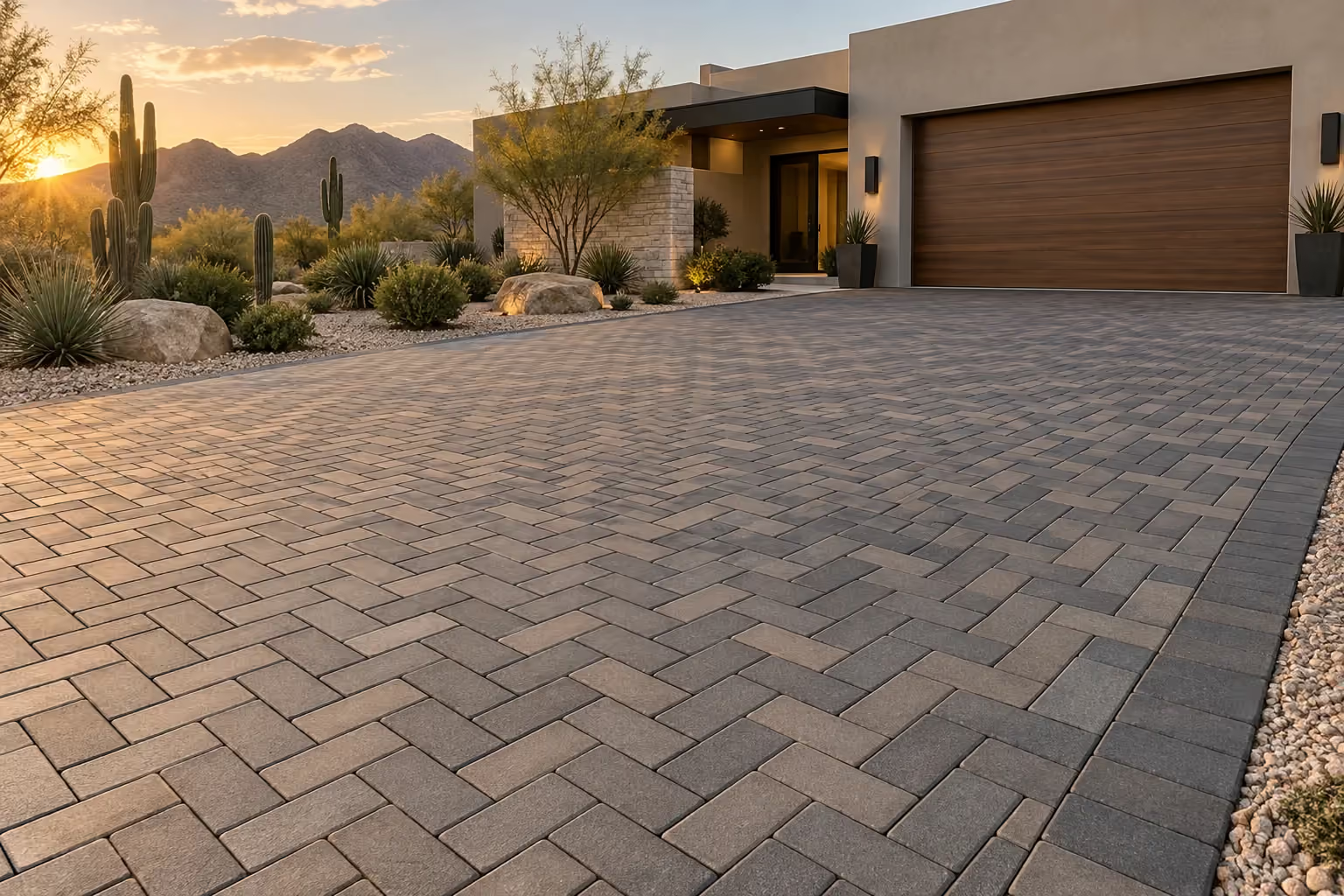
This is a classic for a reason. By laying rectangular pavers at 45-degree or 90-degree angles to create a zig-zag, we aren’t just making it look fancy. This pattern actually creates the strongest interlocking bond. Because the pavers push against each other in multiple directions, they resist the shifting weight of heavy SUVs and trucks better than almost any other layout. If you have a busy driveway, this is a winner.
The Ashlar Pattern
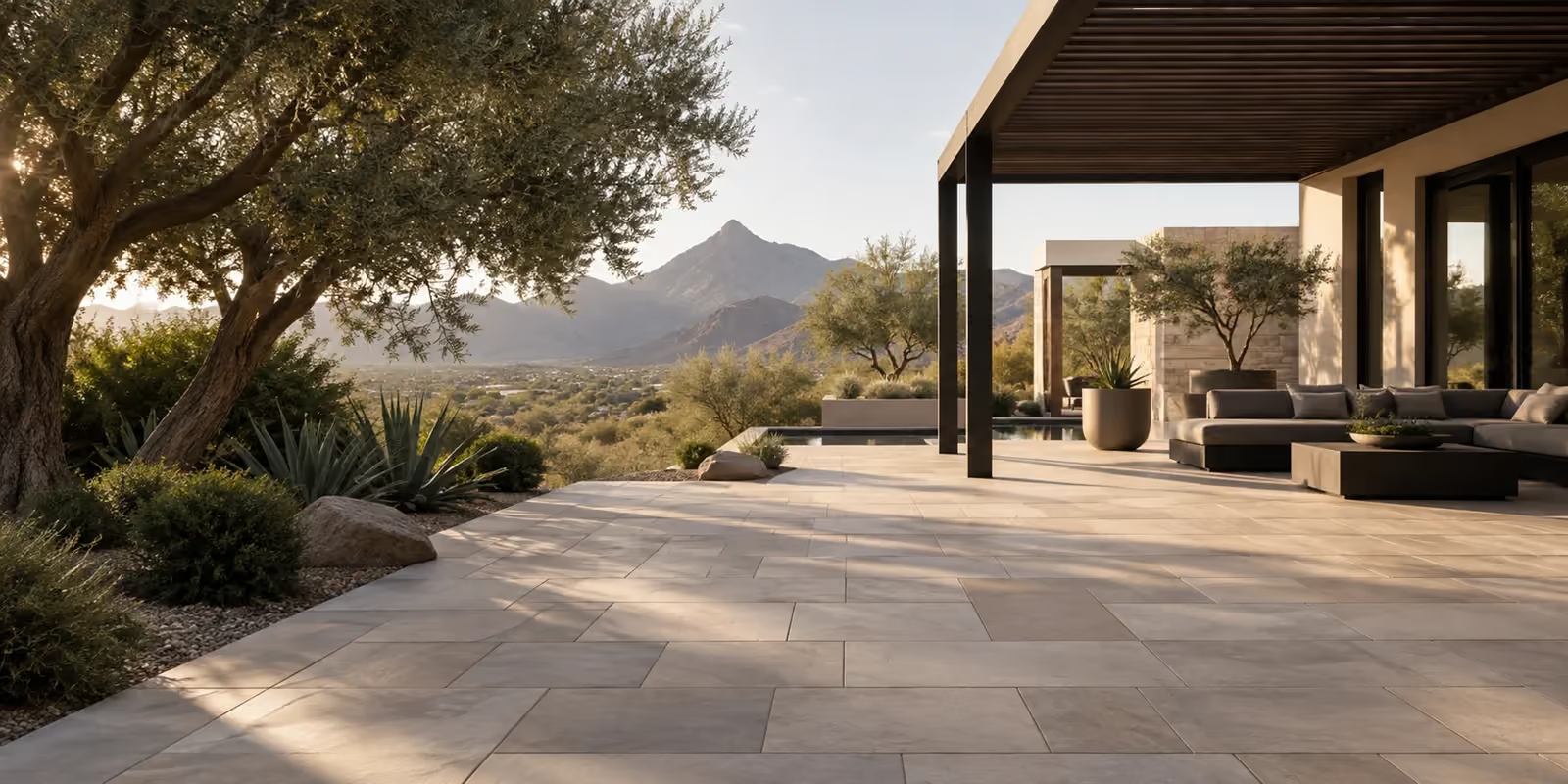
This one is for people who want that “estate” look. It uses a mix of different sized squares and rectangles to create a random, natural appearance. It feels organic. It breaks up the monotony of a large space. If you have a massive driveway, a repeating pattern can sometimes make you dizzy. Ashlar calms it down and looks incredibly high-end, especially with tumbled travertine pavers.
Basket Weave
Picture pairs of bricks alternating horizontal and vertical. It’s vintage. It feels a bit like a historic cottage or an old English garden. It’s not as strong as herringbone for heavy vehicle turning, but for walkways or patios, it adds a cozy, nostalgic charm.
Here is a quick breakdown to help you visualize what might work for you:
| Pattern Style | Best Application | Vibe |
|---|---|---|
| Herringbone | Driveways, High-traffic areas | Dynamic, Strong, Modern |
| Ashlar (3-Piece) | Patios, Wide Driveways | Natural, Relaxed, Upscale |
| Running Bond | Narrow Walkways, Borders | Linear, Clean, Lengthening |
| Basket Weave | Garden Paths, Porches | Traditional, Historic, Cozy |
Let’s Talk About Heat (Because We Live in Arizona)
We can’t ignore the sun. In July, a dark asphalt driveway or grey concrete can get hot enough to fry an egg—literally. You’ve probably done that dance where you run barefoot to the mailbox and instantly regret it.
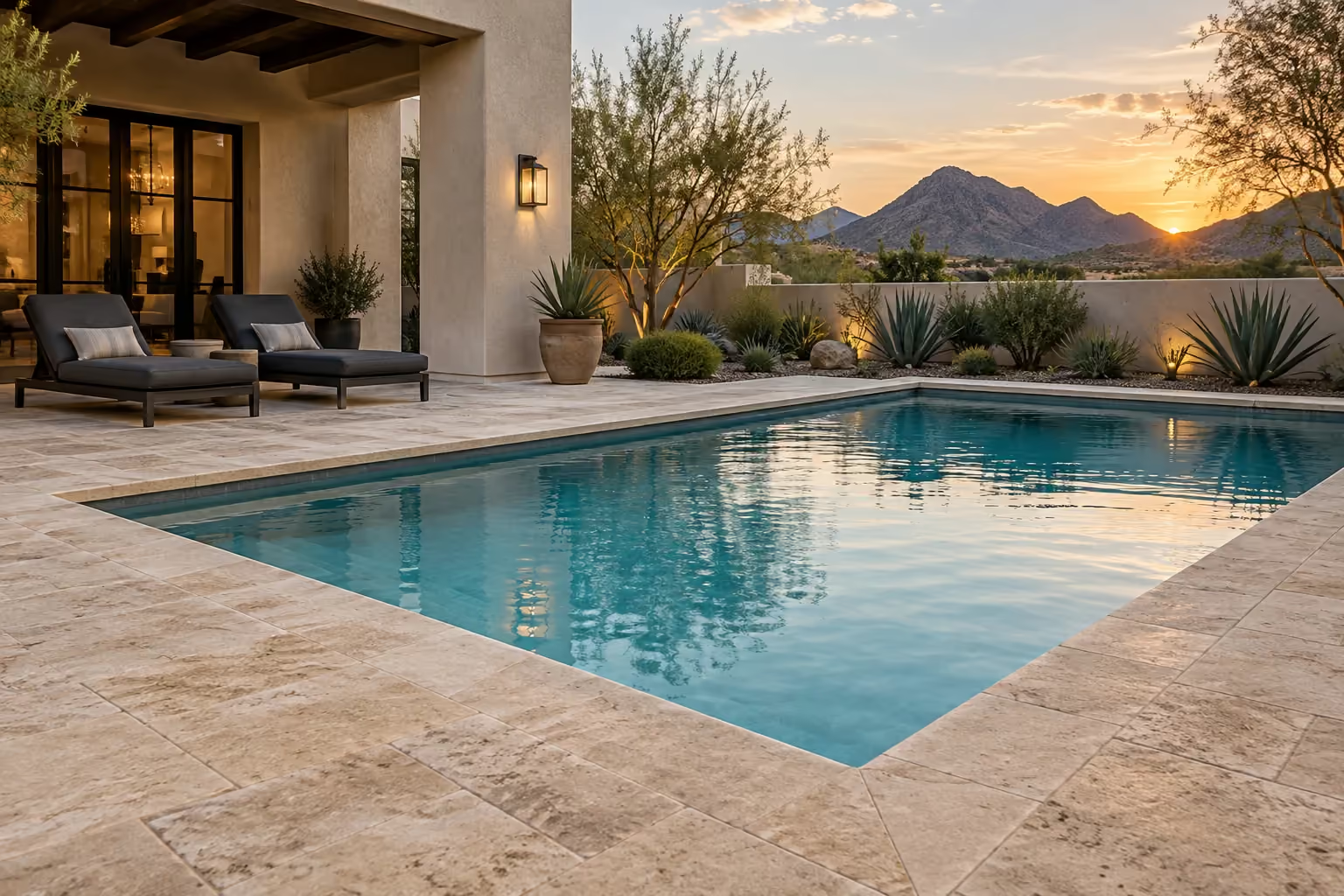
This is where material choice is huge. Travertine pavers are a game-changer here. They are a natural stone formed in hot springs, and they have this amazing ability to stay cooler to the touch than man-made concrete pavers. We’re talking a significant difference in temperature. If your kids play basketball in the driveway or you like to sit out on the front porch barefoot, natural stone is worth looking into.
However, concrete pavers have come a long way too. If you go with lighter colors—creams, tans, or light greys—you can mitigate a lot of that heat absorption. Just stay away from charcoal or dark slate colors unless you want to melt your tires.
Texture and Color: Mixing It Up
One of the biggest mistakes homeowners make is trying to match the pavers exactly to the paint on their house. Please don’t do that. It ends up looking like a giant blob of one color. You want contrast or complementation.
If your house is a warm beige or tan, consider a paver blend that introduces some soft greys or rusty browns to add depth. If you have a grey modern house, warm things up with some sand-colored stones.
Also, think about texture. Smooth pavers look sleek and modern, but textured or “tumbled” pavers hide dirt better. And in Gilbert, we have dust. A lot of dust. A slightly textured surface offers better grip when the sprinklers overspray or during our monsoon season, and it doesn’t show every single footprint.
The “Welcome Mat” Effect: Walkways and Porches
Okay, so the driveway does the heavy lifting, but the walkway to your front door is the red carpet. A lot of builders just pour a straight, narrow concrete path from the driveway to the door. It’s functional, sure, but it’s boring.
Why not curve it?
Adding a gentle curve to your walkway softens the look of the house. It slows people down visually and makes the entrance feel more inviting. You can also widen the path. Standard walkways are usually 3 feet wide. Bump that up to 4 or 5 feet. It allows two people to walk side-by-side comfortably. It sounds like a small detail, but it feels luxurious.
You can also use borders to make things pop. Imagine a field of light travertine with a dark concrete paver border running along the edges. It acts like a picture frame, defining the space and guiding the eye right to your front door.
The Technical Stuff (That You Don’t Have To Worry About)
I know, talking about dirt and gravel isn’t as fun as picking out colors, but this is actually the most important part of the job. You can buy the most expensive stone in the world, but if the guy installing it doesn’t prep the ground right, it’s going to look terrible in six months.
The secret sauce is the sub-base. In Arizona, our soil can be incredibly hard, like caliche, or loose and sandy. We have to dig down, remove that native soil, and bring in road base (a mix of gravel and dirt). Then we compact it. Then we compact it again.
It has to be rock solid. If it isn’t, your pavers will sink where your car tires sit, creating ruts. We call that “trackling,” and nobody wants that.
We also use bedding sand to level the pavers, and finally, polymeric sand for the joints. Have you ever seen a patio with weeds growing up between the bricks? Or ants building little volcanoes in the cracks? That’s because they used regular sand. Polymeric sand has a binding agent in it. When we wet it down after installation, it hardens up almost like grout, but it remains flexible. It locks the weeds and bugs out while keeping the pavers locked in.
Lighting the Way
We haven’t touched on this yet, but lighting is the cherry on top. You’ve spent the effort to boost your curb appeal; don’t let it disappear when the sun goes down.
Integrating low-voltage LED lights directly into the Paver Design is a brilliant move. We can embed lights along the border of the driveway or install step lights if you have a raised porch. It’s not just about looking cool (though it definitely does); it’s about safety. No more tripping over that one uneven step in the dark.
Uplighting on nearby trees or architectural features of the house also reflects off the paver surface, creating a warm, ambient glow that makes your house look like a resort.
Is It High Maintenance?
This is a common question. People see all those individual stones and think, “That looks like a lot of work to keep clean.”
Actually, it’s easier than concrete. If you get a nasty oil stain on a concrete driveway, you are stuck with it forever. You can try to scrub it, but the ghost of that stain remains. With pavers? If you spill a quart of motor oil and can’t get it out, we just pop those five or six stained pavers out and drop new ones in. Good as new.
We generally recommend sealing your pavers every couple of years. The sun here is harsh—UV rays fade colors over time. A good sealer brings the color back to life, kind of like putting lotion on dry skin. It also protects the stone from stains and stabilizes that joint sand we talked about.
Making the Change
Look, upgrading your driveway or front entry is a big project. It’s not something you do on a whim on a Saturday afternoon. But the transformation is incredible. It changes how you feel about your home. It’s the difference between pulling in and thinking, “I need to do yard work,” and pulling in and thinking, “Man, this place looks good.”
You have options. Whether you want the rustic charm of tumbled stone or the sleek lines of modern concrete slabs, there is a design that fits your house and your budget. The key is working with a team that knows the Gilbert area, knows the soil, and knows how to design for our climate.
Ready to Transform Your Home?
Your home deserves a grand entrance, and you deserve a driveway that doesn’t just sit there—it should stand out. At Gilbert Paver Company, we specialize in turning tired, cracked concrete into stunning, durable works of art. We know the local soil, the HOA requirements, and exactly which materials stand up to the Arizona sun.
Stop looking at that grey slab and start imagining the possibilities.
Call us today at 480-534-9680
Let’s build something beautiful together.