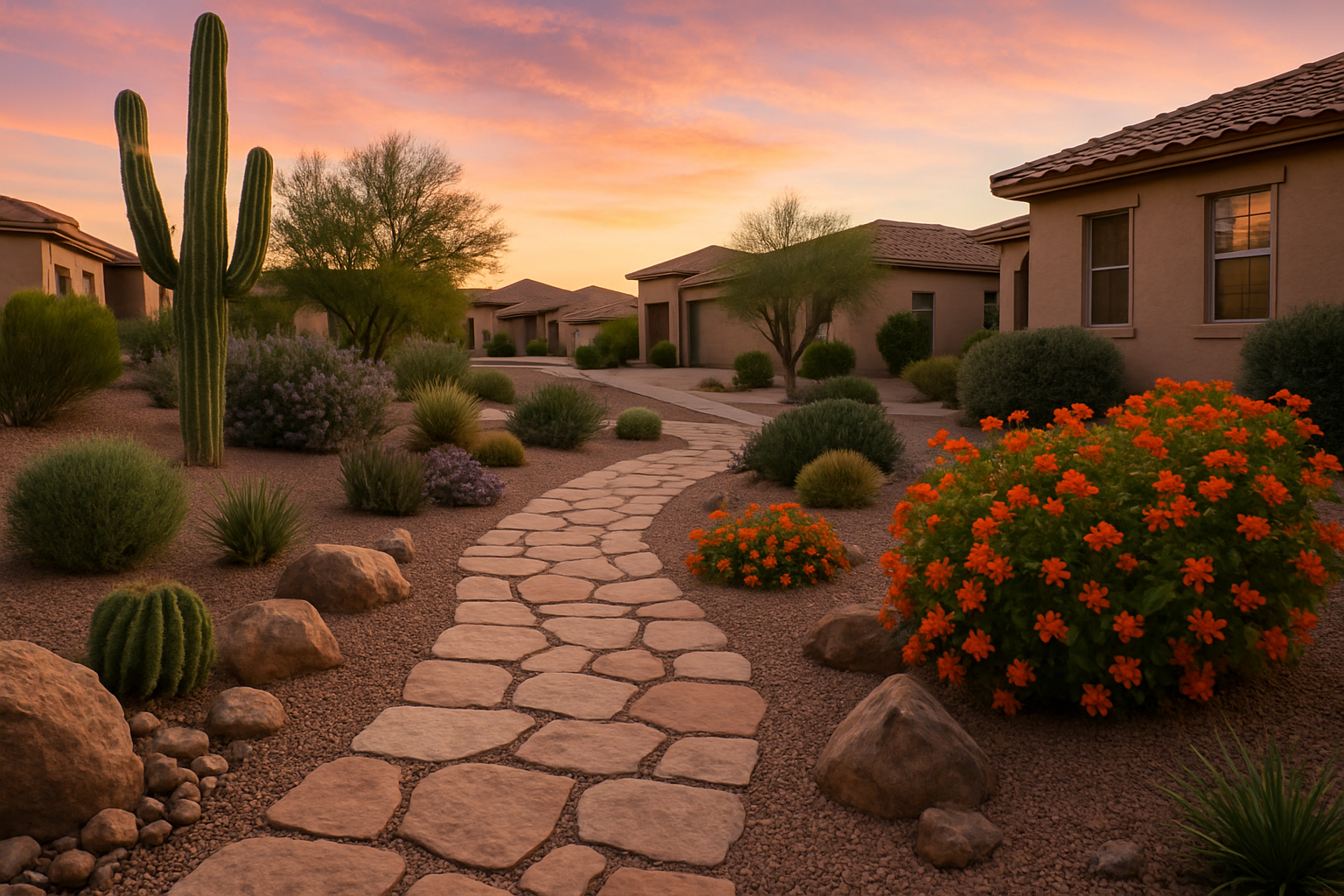
You look out at your backyard and think, “Well, it’s a small space, but it’s mine.” Honestly, having a compact yard here in Gilbert doesn’t mean you have to settle for a boring slab of concrete or a patch of struggling, thirsty Grass. Adding a custom stone walkway can completely change how your outdoor space feels, making it look larger, cozier, and way more inviting all at once.
Small Yards Hide Big Potential
You know what? Dealing with a tight lot can feel frustrating when you want a lush, sprawling oasis. You see these massive estates with endless, winding trails online, and then you look at your own side yard. Small spaces are tricky. They really are tricky. But here’s the thing: working with limited square footage actually forces you to be creative.
When you do not have room for a giant lawn or a massive pool, the hardscape becomes the star of the show. Hardscape is just an industry term for the non-living elements of your landscaping—like stone, brick, and concrete. In a tiny garden, a well-placed stone walkway does a lot of heavy lifting. It guides the eye. It creates flow. It divides the space into usable zones.
Let me explain. Think about how our yards deal with the Arizona heat. Trying to keep grass green through a scorching July afternoon takes gallons of water and endless frustration. Replacing some of that struggling turf with beautiful backyard hardscaping saves water and cuts down your weekend chores. Plus, it gives your garden structure. A walkway gives the space a backbone.
Playing Tricks on the Eye with Path Direction
You can actually trick the brain into thinking a garden is much bigger than it really is. It all comes down to layout. Straight lines are functional. A straight path gets you from your back door to your side gate fast. But straight lines also highlight exactly where your property boundaries end.
Instead, consider a serpentine path. A gently curving walkway creates mystery. When a path bends around a small desert bush or a potted agave, you cannot see the exact destination right away. It makes the journey feel longer. This simple trick adds depth to small garden pathways.
You can also play with the width of the path. A walkway that starts slightly wider near the patio and narrows as it moves toward the back wall forces a false perspective. It makes the back fence look further away. These little layout tricks cost nothing extra to design, but the visual payoff is huge.
Which Stones Survive the Arizona Sun?
Choosing materials for a Gilbert Paver Installation requires thinking about our local climate. The summer sun is brutal. It heats up surfaces until they feel like a frying pan. We have to talk about thermal retention—which is just a fancy, technical way of asking, “Will this stone burn my bare feet when I walk outside to get the mail?”
Some stones absorb heat. Others reflect it. For our local climate, we usually recommend materials that stay reasonably cool. Let’s look at a few popular choices.
| Stone Material | Heat Resistance | Vibe & Aesthetic |
|---|---|---|
| Travertine Pavers | Excellent | Elegant, resort-style, smooth |
| Flagstone | Moderate | Rustic, natural, earthy |
| Concrete Pavers | Good | Clean, modern, highly customizable |
Travertine is a massive favorite around here. It naturally reflects sunlight, making it much cooler to the touch than basic concrete. Brands like Belgard also make some fantastic concrete pavers designed specifically for desert environments, mixing durability with great color retention.
Flagstone is gorgeous. It gives you that classic Southwestern look. The jagged, organic shapes fit perfectly around native desert plants. It can get a little warmer than travertine, but it brings unmatched natural character to a stone walkway design.
To Fill or Not to Fill the Gaps?
There is a big debate in the landscaping world. Do you lay stones tightly together for a solid path, or do you space them out as stepping stones?
Solid paths are clean. They feel formal. A continuous paver walkway means zero tripping hazards, which helps if you have rolling trash cans, strollers, or mobility concerns. Solid paths are also much easier to sweep when the monsoon winds blow a layer of dust over your entire neighborhood.
Stepping stones, on the other hand, bring immense charm to small gardens. Leaving gaps between large slabs of flagstone or oversized concrete pavers softens the hard edges of your yard. But what do you put in those gaps?
- Decomposed Granite (DG): This is the classic Arizona filler. It comes in various earth tones and packs down nicely. It feels natural and drains water perfectly.
- River Rock: Small river stones add texture. They contrast beautifully with smooth, flat pavers.
- Groundcover Plants: Planting something green between stepping stones looks incredible. Kurapia or creeping thyme works well. Wait, I should mention—if you plant live greenery between stones, you will need to run small drip irrigation lines.
Stepping stones are visually lighter. They do not overwhelm a tiny yard the way a massive slab of solid concrete might.
The Little Details Make the Design Pop
A walkway without a border is like a picture without a frame. It just feels unfinished. Borders define the edge of your path and keep your materials from shifting over time.
If you use pavers, a “sailor course” or “soldier course” edge works perfectly. Those are just masonry terms for laying the border bricks in a different direction than the rest of the path. If your main walkway uses tan pavers, adding a dark charcoal border creates a striking, modern contrast.
For rustic paths, rough-hewn cobblestones or even metal landscape edging can hold back the dirt while keeping the focus on the main walking surface. You might even pile medium-sized river rocks along the sides to mimic a dry creek bed. These small details pull the whole yard together.
Don’t Forget What Happens When the Sun Goes Down
Your yard looks completely different at night. Many homeowners design beautiful custom garden paths but completely forget about lighting. If you can’t see the walkway after sunset, you lose half the value of having it.
Solar lights from the big box stores are fine. They do the job. However, low-voltage LED landscape lighting creates a much more upscale feel. Placing small brass path lights every few feet casts a warm, downward glow. It highlights the texture of the stone.
Think about the shadows. When light grazes the slightly uneven surface of natural flagstone, it creates beautiful depth. Lighting also makes your yard safer. A well-lit path keeps guests from tripping over a stray pebble or stepping onto your carefully pruned succulents.
Let’s Be Honest About the Upkeep
People say stone paths are maintenance-free. Well, actually, nothing is truly maintenance-free. Stone is low maintenance. There is a difference.
Dust will settle. Weeds will try to sprout. That is just part of living in the desert. The good news is that caring for a paver walkway is fairly simple. A quick sweep or a spray with the garden hose usually does the trick.
If you choose a solid paver path, the joints between the stones matter. We use something called polymeric sand. Polymeric sand is fine sand mixed with a special binding agent. You sweep it into the cracks, wet it down, and it hardens like cement. It stays slightly flexible, but it stops ants from digging up the dirt and stops weeds from taking root.
Eventually, you might need to re-sweep some fresh sand into the joints every few years. You might also want to seal natural stone like travertine to protect it from mesquite tree sap or accidental BBQ grease spills. That small bit of upkeep keeps your walkway looking brand new for decades.
Let’s Build Something Beautiful
Your small garden holds so much potential. A cramped, uninspired yard can easily become your favorite place to drink your morning coffee or watch the sunset. You just need the right layout, the right materials, and a little bit of design magic.
Whether you want a meandering flagstone trail through your desert garden or a crisp, modern travertine path connecting your patio to the side gate, we can build it. We understand how to work with Gilbert’s unique soil, strict HOA guidelines, and intense summer sun. We handle the heavy lifting so you can just enjoy the results.
Are you ready to stop looking at that boring dirt patch and start walking on something beautiful? Reach out to the Gilbert Paver Company today. You can give us a call directly by phone # 480-534-9680 or Request a Free Quote right now to get your project started. Let’s create a space you love coming home to.