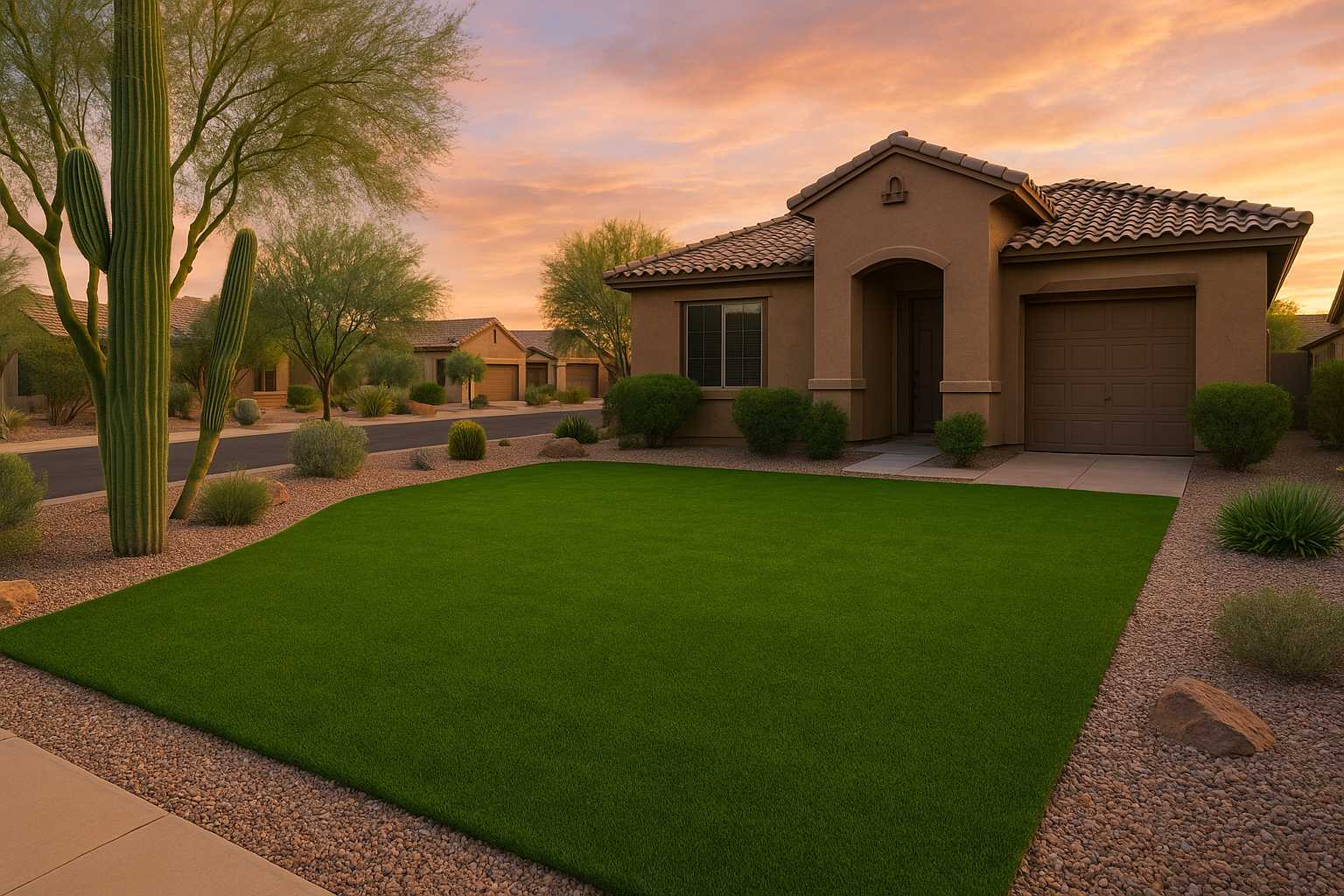
Let’s be real—swapping out a thirsty, struggling Grass yard for Artificial Turf is one of the smartest things a Gilbert homeowner can do to beat the intense summer heat. But if you think your new synthetic oasis is entirely off the hook for upkeep, you might be in for a slight surprise. It is absolutely low maintenance, but keeping your lawn looking vibrantly fresh still takes a tiny bit of routine elbow grease.
The Myth of the Completely “Maintenance-Free” Yard
Honestly, a lot of people hear the words “fake grass” and assume they can roll up their garden hose, toss their rake in the trash, and never think about yard work again. Let me explain why that is a bit of a stretch.
Yes, you get to skip the endless mowing, the expensive watering, and the frustrating fertilizers. That alone saves you dozens of hours and a pretty penny every single year. But your yard still exists out in the open elements. Dirt blows around. Trees drop leaves. Birds fly overhead. Life happens. So, while artificial turf maintenance is a breeze compared to keeping natural Bermuda grass alive in July, it still requires some attention.
Here’s the thing. Think of your new lawn like the carpet inside your house. You do not have to water your living room rug, but you still vacuum it, right? You fluff it up when the couch leaves a dent. You clean up a spill if somebody knocks over a glass of iced tea. Your outdoor synthetic lawn needs that same basic level of respect to stay looking thick, green, and inviting.
Battling the Arizona Dust, Dirt, and Debris
If you live in Gilbert, you already know the drill with our weather. We get those massive summer haboobs that roll through and leave a fine layer of brown dust on absolutely everything. We also have gorgeous desert trees—like Palo Verdes and Mesquites—that are notorious for dropping tiny yellow blossoms and sticky pods all over the place.
All of that organic matter inevitably finds its way onto your lawn. If you just leave it sitting there, it doesn’t just look messy. It actually breaks down over time, turning into compost that gets trapped down in the synthetic grass fibers. That dirt buildup blocks your drainage holes and creates a perfect little breeding ground for pesky weeds.
You know what? Dealing with this is incredibly simple. A standard leaf blower is going to be your absolute best friend here.
Smart Habits for Keeping the Debris Away:
- Blow it off weekly: Just fire up your leaf blower and gently push the leaves and dust toward the edges of your yard. Keep the nozzle angled slightly downward so you do not blast the infill sand right out of your turf.
- Pick up the heavy stuff: Big branches or heavy palm fronds should be picked up by hand. Dragging sharp, heavy branches across your yard can actually tear the synthetic backing.
- Give it a quick rinse: Every couple of weeks, grab your hose and lightly spray the turf down. This washes away the fine desert dust that the blower misses, bringing back that vibrant green color instantly.
| Debris Type | Best Tool for the Job | How Often to Remove |
|---|---|---|
| Dusty dirt & sand | Garden hose | Every 2-3 weeks |
| Leaves & tiny blossoms | Leaf blower | Weekly |
| Big sticks & branches | Your bare hands | As soon as they fall |
The Not-So-Glamorous Reality of Pet Messes
Dogs absolutely love synthetic grass. It feels soft on their paws, it does not get muddy when it rains, and it gives them a clean place to play. But let’s talk about the elephant in the room—or rather, the dog out in the yard. Pet urine and solid waste need to be handled properly, or your beautiful backyard will start smelling like an oversized litter box the second the afternoon sun hits it.
It gets hot. It just gets hot out there, and heat bakes odors right into the surface.
When your dog goes number two, let it dry out a bit, pick it up just like you normally would, and then hose down the spot. That part is easy. Urine is the trickier issue because it trickles down into the silica sand infill (the heavy sand brushed into the grass to keep it standing up) and the underlying base materials.
If you just wash it with plain water, the uric acid crystals can get left behind. To combat this, you need an enzyme cleaner. Enzyme cleaners are amazing because they contain good bacteria that literally eat the odor-causing ammonia. You just attach a bottle to your garden hose, spray the heavily used areas, and let the enzymes do the heavy lifting. If you do this once a week, you will completely eliminate those lingering smells.
Brushing: Keeping Those Blades Standing Tall
Have you ever noticed how carpet gets flat in the hallways where everybody walks? Synthetic grass upkeep works the exact same way. If you have kids who run the exact same path to the trampoline every single afternoon, those plastic blades are going to lay flat.
This flattened look is called “matting.” To fix matting, you have to perform a technique called cross-brushing.
Cross-brushing simply means sweeping the grass blades against their natural grain to force them to stand back up straight. It is just like combing a bad case of bedhead. You need a broom with stiff synthetic bristles—a push broom works perfectly.
Important warning: Never, ever use a metal-bristled brush or a wire rake. Metal will shred the plastic grass fibers, pull up the backing, and completely ruin your expensive paver and turf installation. Stick to stiff nylon or plastic bristles.
Just start at one end of the yard and firmly push the broom against the direction the grass is leaning. Doing this once a month keeps your yard looking plush, thick, and perfectly manicured. It also helps redistribute the infill sand evenly across the surface.
Wait, Do Weeds Actually Grow in Fake Grass?
This one always catches homeowners off guard. Yes, weeds can occasionally pop up in artificial turf. They just do. They really, really do.
Now, they are not growing up through the heavy weed-barrier fabric underneath your yard. Desert weeds are just stubborn survivors. Weed seeds blow in on the wind, land on top of your grass, settle down into the infill sand, and sprout right there on the surface. You will usually see things like spotted spurge or purslane creeping up along the edges near your concrete or pavers, where dirt naturally gathers.
Do not panic. Because the roots are trapped in the loose sand rather than hard soil, you can usually just pinch them and pluck them right out with zero effort. If you notice a patch of them sprouting after a heavy monsoon rain, you can spot-treat them with a gentle, water-based weed killer. Just spray it directly on the weed, let it wither, and pull it away. Avoid using harsh chemical treatments that might discolor the plastic blades.
Cooling Things Down When July Hits Hard
Speaking of the intense Arizona weather, let’s address the heat. Artificial grass is made of synthetic materials, and when the sun beats down on it directly, it gets significantly hotter than natural soil.
If you are planning to send the kids out barefoot, or if you are hosting a backyard barbecue on a blazing Saturday afternoon, you will want to cool the surface down first. The easiest way to do this is a process called evaporative cooling.
Just take your hose and spray the entire lawn for a few minutes. As the water sits on the hot plastic and slowly evaporates, it pulls the heat out of the grass. A quick five-minute sprinkle can drop the surface temperature of your lawn dramatically, making it perfectly comfortable for bare feet and puppy paws.
If heat is a major concern for your family, there are also specialized infills—like Zeolite or HydroChill—that trap moisture inside the sand and release it slowly throughout the day. It acts exactly like sweat does on human skin, keeping the turf cooler for hours on end. It is a fantastic upgrade to consider if your yard faces direct west-facing afternoon sun.
Handling the Occasional Backyard Spill
Since your backyard is essentially an extension of your living room, spills are going to happen. A plate of ribs gets dropped. A glass of red wine tips over off the patio table. A kid drops a melting popsicle right in the middle of the yard.
Because artificial fibers are non-porous, they actually resist staining incredibly well. But you still want to clean up messes quickly before they attract ants or get sticky.
For spilled drinks or sticky foods, simply scrape up the solid bits with a plastic spatula or a paper towel. Then, mix a little mild dish soap with warm water in a bucket. Use a sponge or a soft rag to scrub the area, and rinse it thoroughly with the hose. That’s it! Your grass will be as good as new, and nobody will ever know about the dropped hotdog.
Let’s Make Your Yard the Envy of the Neighborhood
A beautiful, green lawn that stays perfect all year long is completely achievable. It just requires a few simple routines: blow away the leaves, rinse away the dust, brush up the high-traffic areas, and clean up after the dog. By giving your yard just a fraction of the time you used to spend mowing and edging, you protect your investment and keep your outdoor living space looking absolutely flawless.
Are you thinking about upgrading your current yard, or do you need help designing a gorgeous, low-maintenance outdoor oasis that fits your lifestyle perfectly? We are here to help bring that vision to life.
Reach out to the team at Gilbert Paver Company today! You can call us directly by phone at 480-534-9680, or simply click the link on our website to Request a Free Quote. Let’s build an incredible backyard space you can enjoy for years to come.