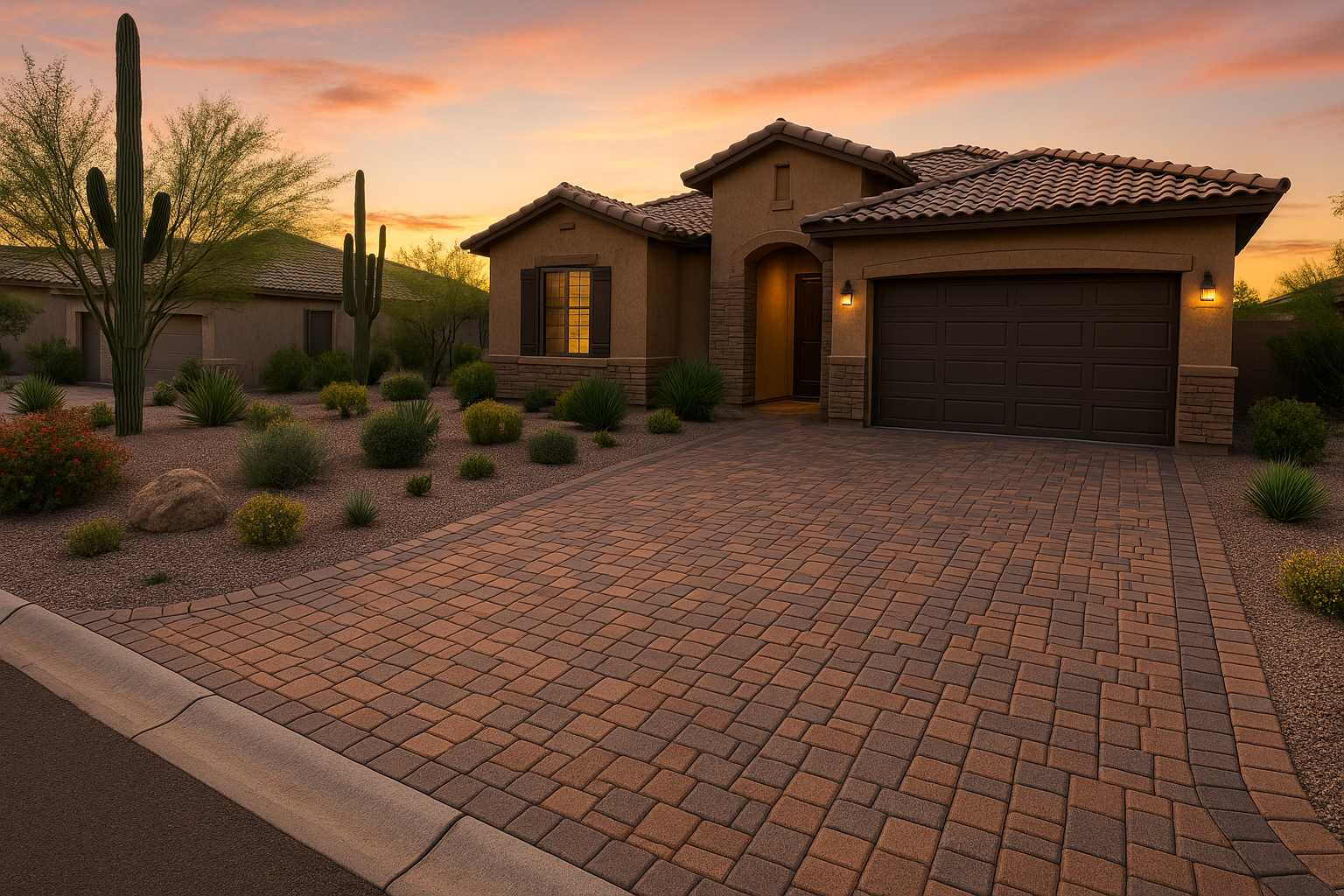
Honestly, driving up to a cracked, faded concrete Driveway every single day is a surefire way to kill your home’s curb appeal before you even open the front door. You know what? Swapping out that tired slab for a stunning custom design completely changes the vibe of your property, making it look custom-built rather than cookie-cutter. Living right here in Gilbert, AZ, you need something that can handle the blazing sun while still making the neighbors a little jealous.
## So, what is the big deal about replacing concrete anyway?
Let me explain. Concrete is cheap, sure. But we all know what happens to large, poured slabs in the intense Arizona heat. They crack. The ground beneath our feet shifts just a little bit with the changing seasons, the summer sun bakes the surface, and suddenly you have a spiderweb of ugly fractures running right up to your garage.
Pavers are a completely different animal. Because they are individual units—whether they are made of stone, brick, or high-density concrete—they have natural joints between them. This means they can actually flex with the earth. Hardscaping professionals call this an interlocking pavement system. It basically means the weight of your vehicles is distributed evenly across multiple pieces, making the whole thing incredibly strong.
And honestly, they just look way better. Have you ever noticed how a house with a beautifully paved front entrance immediately looks more expensive? It is a weird psychological trick, but it absolutely works. Plus, if one single block gets stained by a leaky oil pan from an older truck, you just pull up that one piece and replace it. You never have to pour a whole new driveway again.
## The herringbone hustle—why this layout is a total powerhouse
Here’s the thing about laying brick or stone. How you arrange it matters just as much as what material you actually use. The herringbone paver pattern is easily one of the most popular choices for high-traffic areas, and there is a very scientific reason for that.
In a herringbone layout, the blocks are laid at 45-degree or 90-degree angles to each other, creating a continuous zig-zag effect. It is a timeless, classic look that actually goes way back to ancient Roman roads. Those guys definitely knew a thing or two about building infrastructure that lasts for centuries.
Why does this specific pattern matter so much for where you park your cars? Because all that zig-zagging creates a massive amount of friction between the individual pieces. When you turn your steering wheel, the heavy tires put a crazy amount of rotational force on the ground beneath them. Industry folks refer to this as braking and accelerating shear. A herringbone pattern absorbs that twisting force beautifully. The pieces physically push against each other and lock together, so they do not shift, rut, or separate over time.
You get a surface that looks incredibly elegant and sophisticated. But underneath that pretty exterior, it is tough as nails. You can drive heavy SUVs over it every single day without worrying about the stones pushing out of place.
## Playing with borders and banding to make things pop
If you want to make your front yard look like a luxury resort entrance, you have to think about contrast. A solid field of one single color is nice, but adding a contrasting border is what gives your property that finished, high-end frame.
* Double soldier course borders: This is just a fancy masonry term for laying two rows of rectangular pavers side-by-side around the outside edge. Using a dark charcoal border against a lighter gray or desert tan field really draws the eye and defines the space.
* Color blending: Instead of picking just one flat color, you can mix two or three complementary shades. It creates a mottled, natural look that hides dirt, dust, and tire marks remarkably well.
* Texture mixing: Who says you have to stick to just one finish? Throwing down a smooth, contemporary border against a tumbled, rustic inner section adds a ton of visual depth to the ground.
I mean, think about it like framing a piece of art. A good frame makes the picture inside look twice as good. You can completely customize the border colors to match the painted stucco on your house or the stone veneer on your entryway pillars. It ties the whole exterior together perfectly.
## What materials actually survive the Gilbert summer?
We deal with a highly unique climate here in the East Valley. The sun is absolutely relentless for months on end, and then out of nowhere, we get hammered by aggressive monsoon rains. You need raw materials that look gorgeous but do not crumble or fade after two brutal summers.
Let’s look at the main options you should be considering for your driveway renovation.
| Paver Material | Heat Resistance | Best Vibe / Style |
| :— | :— | :— |
| Concrete Pavers | Very Good | Versatile, modern, or traditional |
| Brick Pavers | Excellent | Classic, rustic, timeless |
| Travertine | Superior (Stays cool) | High-end luxury, Mediterranean |
Notice how travertine stays cool? A lot of folks use natural travertine for Pool Decks because it literally repels heat, making it comfortable to walk on barefoot. However, thicker travertine pieces work wonders for driveways, too. They give the home an instantly wealthy, Mediterranean feel.
Concrete pavers are probably the most common choice around here, though, because they come in practically every shape, size, and color imaginable. They are manufactured under extreme pressure to be incredibly dense, making them highly resistant to the severe fading caused by intense UV rays. Clay brick is another fantastic option because the color is baked right in—it will never fade, no matter how much sun it takes.
## Bringing a little life to the hardscape with turf ribbons
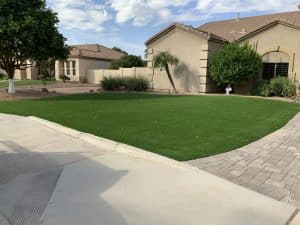
Have you seen those modern, upscale driveways with crisp strips of green Grass running between large concrete slabs? That is a massive design trend right now. It is called a permeable layout, or sometimes just “turf ribbons.”
Basically, you leave a gap of a few inches between large, oversized slabs and fill that negative space with Artificial Turf, gravel, or a tough creeping groundcover. Honestly, I always recommend high-quality artificial turf for Gilbert homes. Real grass in those tiny gaps just fries in the summer heat and takes way too much water to keep looking fresh.
This layout does something else really cool, too. It helps tremendously with drainage. When a freak monsoon downpour hits in late July, the heavy rainwater has somewhere to go besides running straight down into the street and flooding the neighborhood storm drains. The water naturally seeps into the ground between the blocks. It is a tiny, hidden detail, but it actually helps manage water runoff on your property. Plus, the bright, vibrant green contrast against a dark, smooth surface is simply gorgeous.
## Getting the installation right from the ground up
You might think you can just toss some sand down and start dropping bricks. Actually, you can’t. Well, you can, but your beautiful new driveway will sink and buckle within a month. A lasting driveway is all about what happens underneath the surface.
Before a single stone is laid, we have to excavate the old dirt and bring in a thick layer of aggregate base (AB). This is a mix of crushed rock and dirt that gets compacted down with heavy machinery until it is as hard as a rock. This base layer is the true foundation of the entire Paver Installation.
After the base is rock-solid, we spread a thin layer of bedding sand. We use long metal poles to “screed” or perfectly level this sand. The sand gives the pavers a little cushion to settle into. Once everything is laid out in your chosen pattern, we sweep joint sand into all the cracks and run a vibrating compactor over the whole thing. That heavy vibration forces the sand down tight and locks the entire driveway together into one solid, unmoving piece. It is a lot of heavy lifting, but doing it the right way ensures your driveway lasts for decades.
## Navigating the dreaded neighborhood HOA rules
Okay, we need to talk about the elephant in the room. Most residential neighborhoods in Gilbert have a Homeowners Association. And you know how strict they can be about exterior modifications.
The good news is that HOAs almost always approve paver driveways. Why? Because they demonstrably raise property values. They want the neighborhood to look neat, tidy, and upscale. You just have to make sure the specific colors and patterns you pick are on their approved list. Usually, earthy tones—tans, terracotta, muted grays, and desert browns—pass without a hitch. Neon pink or bright blue? Probably not going to fly.
A solid hardscape contractor will actually help you put together the spec sheets and physical color samples you need to submit to the architectural committee. Having a professional handle the paperwork takes the headache right out of the approval process.
## Let’s build something you are actually proud of
A driveway is so much more than just a functional place to park your car overnight. It is the literal red carpet to your home. When you upgrade to a custom paver driveway, you are investing in incredible durability, serious curb appeal, and an everyday sense of pride when you pull up after a long day at work.
Whether you are leaning toward a rugged, old-world cobblestone look, a sleek modern grid with artificial turf ribbons, or a classic herringbone setup, the aesthetic options are practically endless. The right design makes your property stand out in the best possible way.
Are you ready to ditch the cracked concrete and give your Gilbert home the grand entrance it deserves? The team at Gilbert Paver Company is here to help you figure out exactly what works for your space and your budget. Give us a call at 480-534-9680 to bounce some ideas around, or Request a Free Quote right now to get the ball rolling. Let’s make your front yard the absolute envy of the neighborhood.