
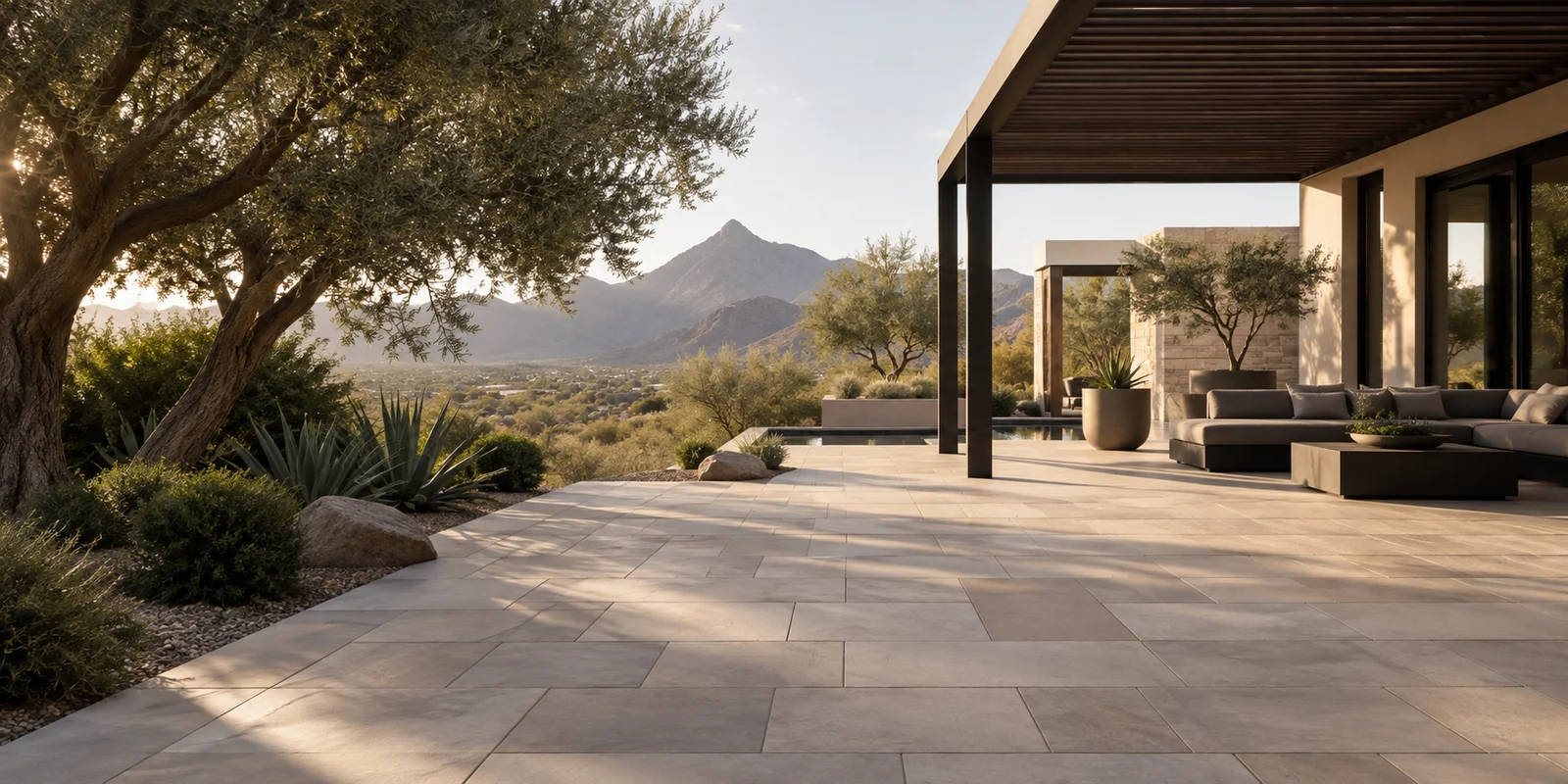

A fire feature changes the way a seating area is arranged. Rather than choosing by appearance alone, consider how the space will be used and the requirements of the actual product.
A central fire pit
A central feature can bring a group together, but the seating and walking routes must follow the required clearances. Decide how people reach the area, where furniture belongs and how the feature will be supervised.
A fire table
A purpose-built fire table can combine a focal point with a more furniture-like presence. Check whether its surface is intended for the proposed use, the specified fuel and the manufacturer's operating instructions. Do not assume a tabletop feature is suitable for an enclosed or covered setting.
An outdoor fireplace
A fireplace creates a different visual anchor from a freestanding fire pit. Structural support, venting, clearances and fuel requirements need separate assessment. The surrounding patio plan should support the approved installation rather than dictate an unsafe location.
Portable features
Portability does not remove the need for a stable surface, appropriate clearances and product instructions. Decide where the feature can safely operate before making the furniture layout depend on it.
Make the paving part of the plan
Choose a surrounding surface appropriate for the use and maintenance involved. Keep decorative borders and transitions simple, and understand where the heat-rated system ends and the landscape finish begins.
- Compare complete documented products, not only silhouettes.
- Ask what work belongs to the feature installer and what belongs to the paving scope.
- Confirm local and property-specific restrictions.
- Keep access, supervision and future maintenance in the design.
Start with the whole backyard layout, then refine the paved gathering area.