
Guides
Choosing Paver Materials for Arizona
Choose the material for its actual use, finish and installation, then compare samples in your own space.
Consider the details
Compare the material and its complete installation.
Choose the material for its actual use, finish and installation, then compare samples in your own space.
Begin with the job the paving must do
A driveway carries vehicles; a patio supports furniture and walking; a pool deck introduces repeated wet use and an edge detail. Decide the application before choosing a color. Ask for the specific product's intended use and the supporting installation assembly. Large size, attractive texture or a supplier category name does not establish that a product fits every one of those jobs.
Concrete: formats and system choices
Manufactured concrete units offer many dimensions, finishes and blended colors. Smaller interlocking products and large-format slabs can have different application limits. Review the actual thickness, rated use, pattern and support together. A paver may be individually replaceable, but discontinued stock and weathering affect the match. If permeable paving is the goal, request a complete drainage assembly; ordinary joints do not make a standard patio a specified permeable system.
Clay brick: confirm what the name describes
Some products described as brick pavers are brick-shaped concrete; others are clay paving brick. The composition, exterior rating and intended loading matter. Compare the unit dimensions and pattern modules before planning borders and curves. Do not use house or wall brick as a paving specification merely because the color suits the architecture. Care and treatments should follow the actual material and manufacturer.
Travertine and limestone: compare the selection
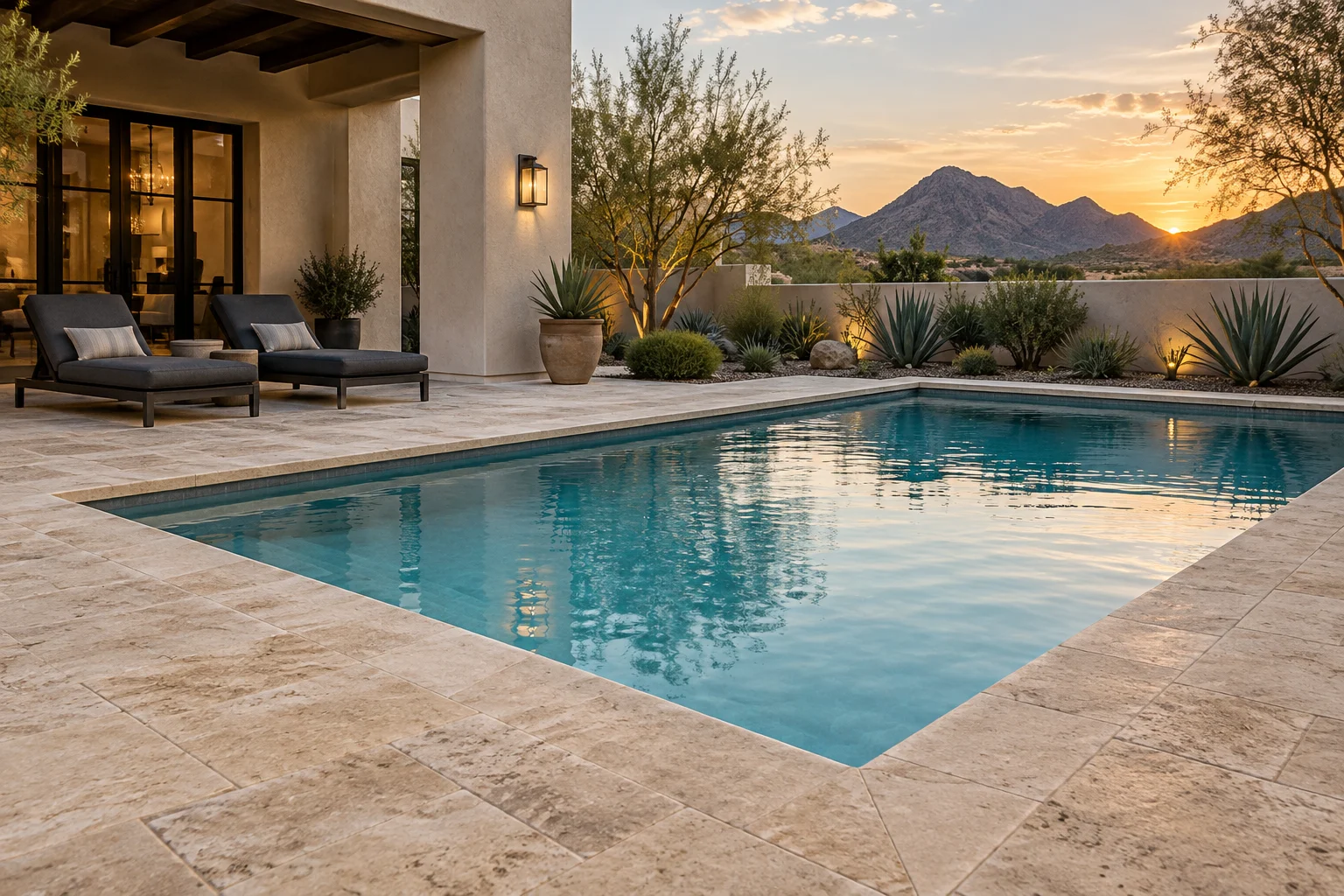
Natural stone varies by geology, quarry, grade and finish. The Natural Stone Institute identifies travertine as a type of limestone and cautions that exterior wall suitability does not establish paving suitability for every stone variety. Compare representative units and outdoor application guidance. Both limestone and travertine can be affected by mild acids, so vinegar and general acidic patio cleaners are poor default care choices.
Outdoor porcelain: a different installation and care system
Exterior porcelain offers stone, wood and concrete-inspired surfaces, but indoor tile should not be assumed suitable as outdoor paving. Follow the chosen product's current support, joints and cutting guidance. MSI's Arterra instructions distinguish installation methods, including a mortar-set assembly for driveway use. Another brand's patio system cannot be assumed equivalent. Some exterior porcelain ranges do not require sealing, unlike treatments that may be considered for other materials.
Compare samples in the conditions that matter
Place several samples beside the house and the adjoining surface. Look at color variation, cut edges and texture in sun and shade; review wet conditions where relevant. No sample guarantees that the finish remains cool or slip-proof. Ask how cleaning, a recommended sealer or everyday contamination changes the surface. Confirm availability, the installer-supported assembly and replacement options before finalizing the estimate.
Product and planning references
Natural Stone Institute: limestone and travertine ↗Natural Stone Institute: stone care and cleaning ↗MSI: Arterra porcelain installation guidelines ↗CMHA: concrete-paver overlay guide specification ↗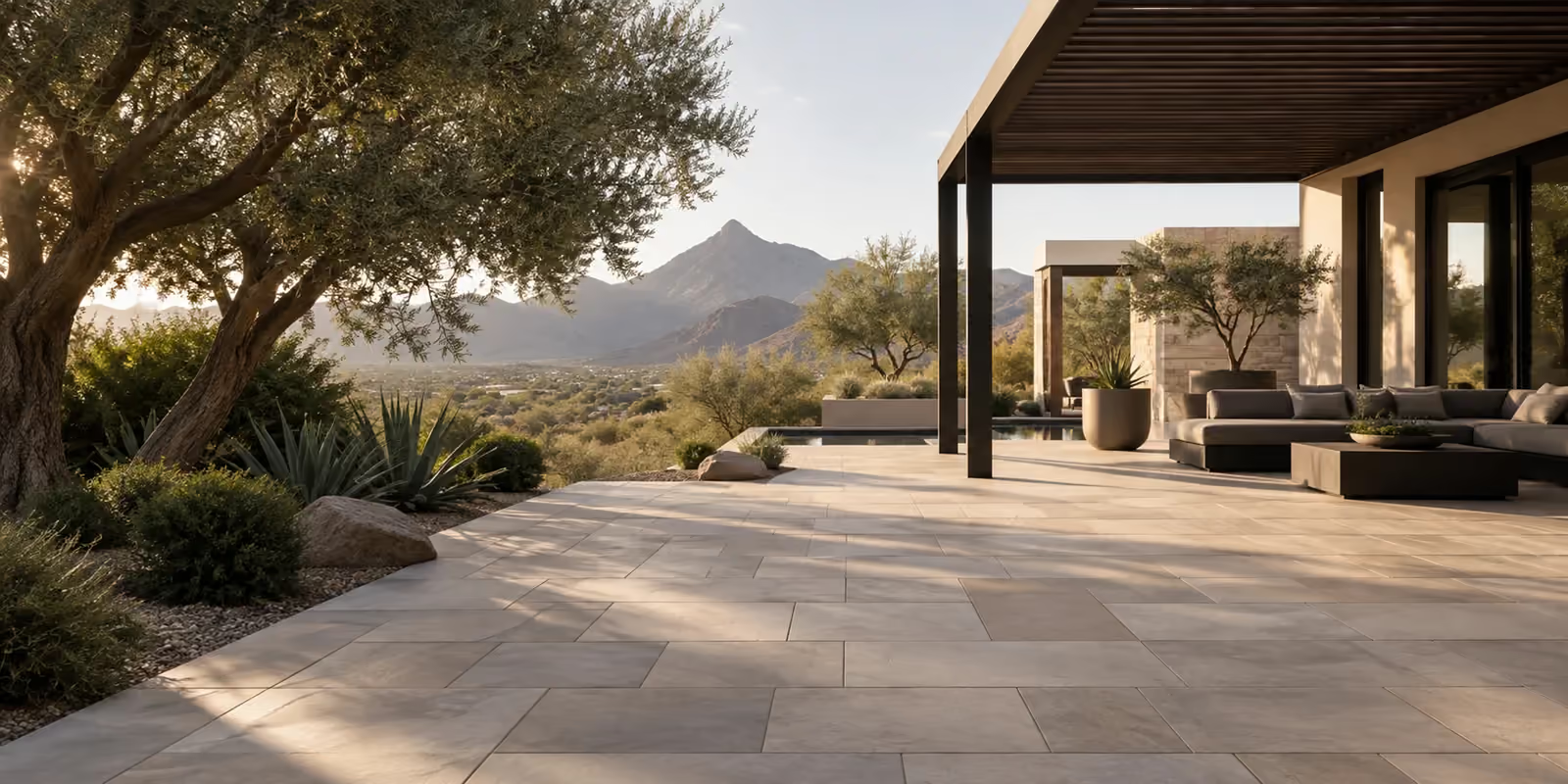
Bring the space together
Look at the whole composition: surface, architecture, planting and the places you want to spend time.
Illustrated design inspiration, not completed-project photography.Questions worth asking
Before the project begins.
What is the best paver material for an Arizona patio?
There is no single best category for every property. Compare the actual product, finish, support, exposure, care and preferred appearance. Samples and application guidance are more useful than a universal material ranking.
Should I choose the material before the layout?
Develop both together. The application and footprint shape the suitable products, while dimensions and pattern modules affect cuts, borders and finished heights.
Can I use the same material for the driveway and pool deck?
Sometimes a product family offers suitable options, but vehicle loading and wet-use conditions need their own approval and assembly. Do not transfer one application detail to another.
Keep exploring
Connected decisions.
A good place to begin
Make room for
something beautiful.
Share your space, your ideas and the work you have in mind. Start with a project-specific conversation.
Request a free quote