
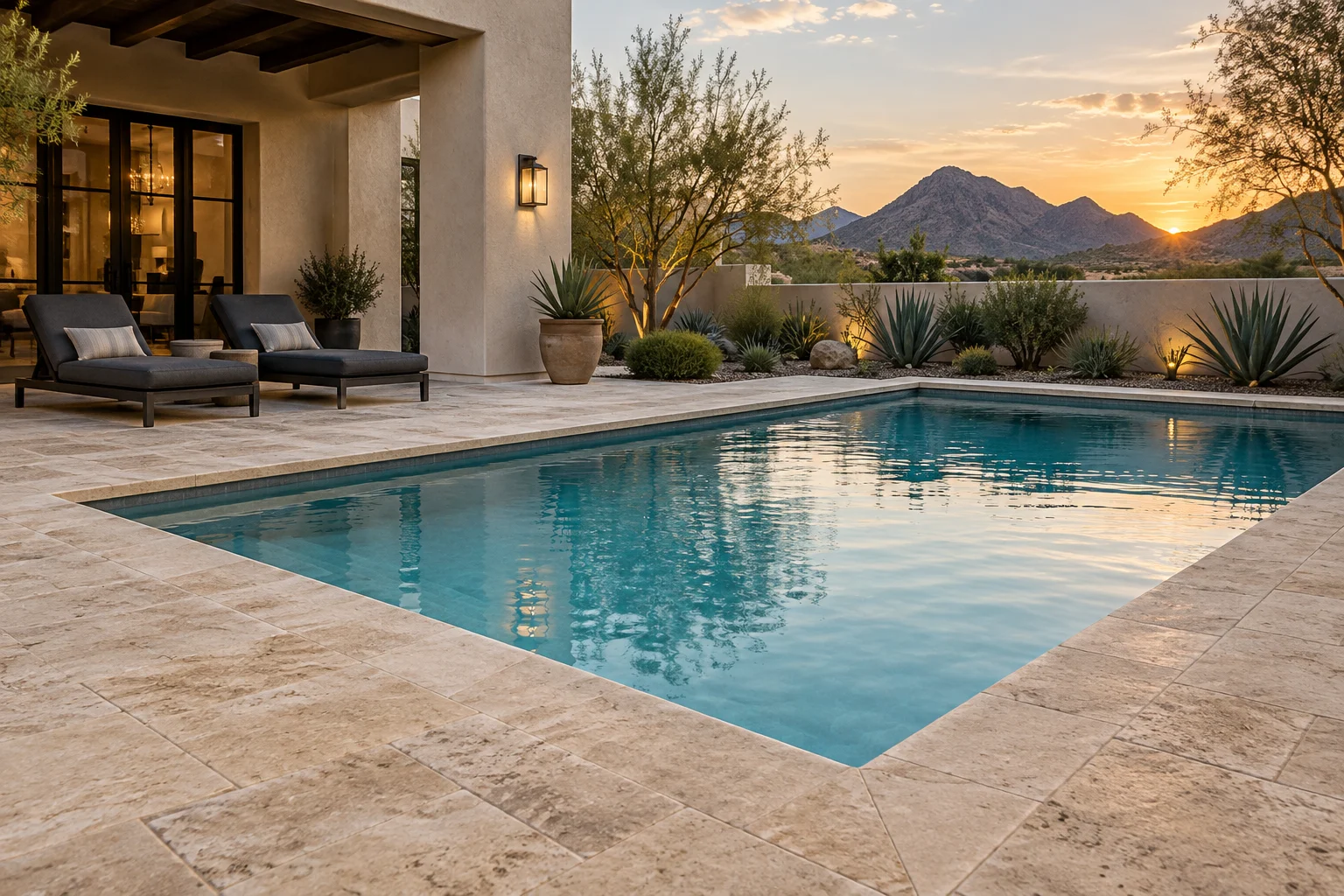
Sealing
Paver Sealing in Gilbert, AZ
Protect the surface without losing its character. Choose the finish for the material, exposure and way the space is used.
Consider the details
Prepare the surface. Choose the right finish.
Protect the surface without losing its character. Choose the finish for the material, exposure and way the space is used.
Natural look or enhanced color?
Penetrating and film-forming products can behave differently. Appearance, texture and intended use should guide selection; a glossy finish is not automatically the best option.
Preparation comes before product
Cleanliness, dryness, existing coatings and joint condition affect the result. Stains and efflorescence may need material-specific treatment. Do not seal over unresolved movement or contamination.
Ask what changes after sealing
Discuss cure time, wet traction, compatibility and future maintenance. Around pools or on driveways, manufacturer guidance and the actual exposure matter more than a universal resealing interval.
Identify the substrate and existing coating
Before choosing a sealer, establish whether the surface is concrete, clay or natural stone and whether it has been treated before. Old coatings, moisture and residues can interfere with a new application. Identify any failing finish instead of applying another coat automatically. Some outdoor porcelain products do not need a topical sealer; always use the current product guidance rather than a rule intended for concrete pavers.
Compare finish and use, not just sheen
A natural-look treatment and an enhancing film can produce noticeably different results. Ask to see a representative sample and discuss appearance when wet, staining expectations and traction in the intended setting. Around pools, the chosen product and any required texture additive need particular attention. The Natural Stone Institute explains that impregnating treatments increase stain resistance, not stain-proof performance. Sealing cannot repair an etched surface, cracked unit or unstable base.
Get application and upkeep instructions in writing
Preparation, drying, temperature limits, coat requirements and cure time belong to the selected product's instructions. Avoid copying a timetable from another brand or promising a fixed resealing interval for every surface. Techniseal's guidance warns against routine annual extra coats, which can damage a finish rather than improve it. Keep the product name and care instructions so a future cleaner or resealing contractor can assess compatibility.
Product and planning references
Techniseal: concrete-paver cleaning and sealing guidance ↗Natural Stone Institute: stone care and cleaning ↗Belgard: outdoor porcelain product and application guide ↗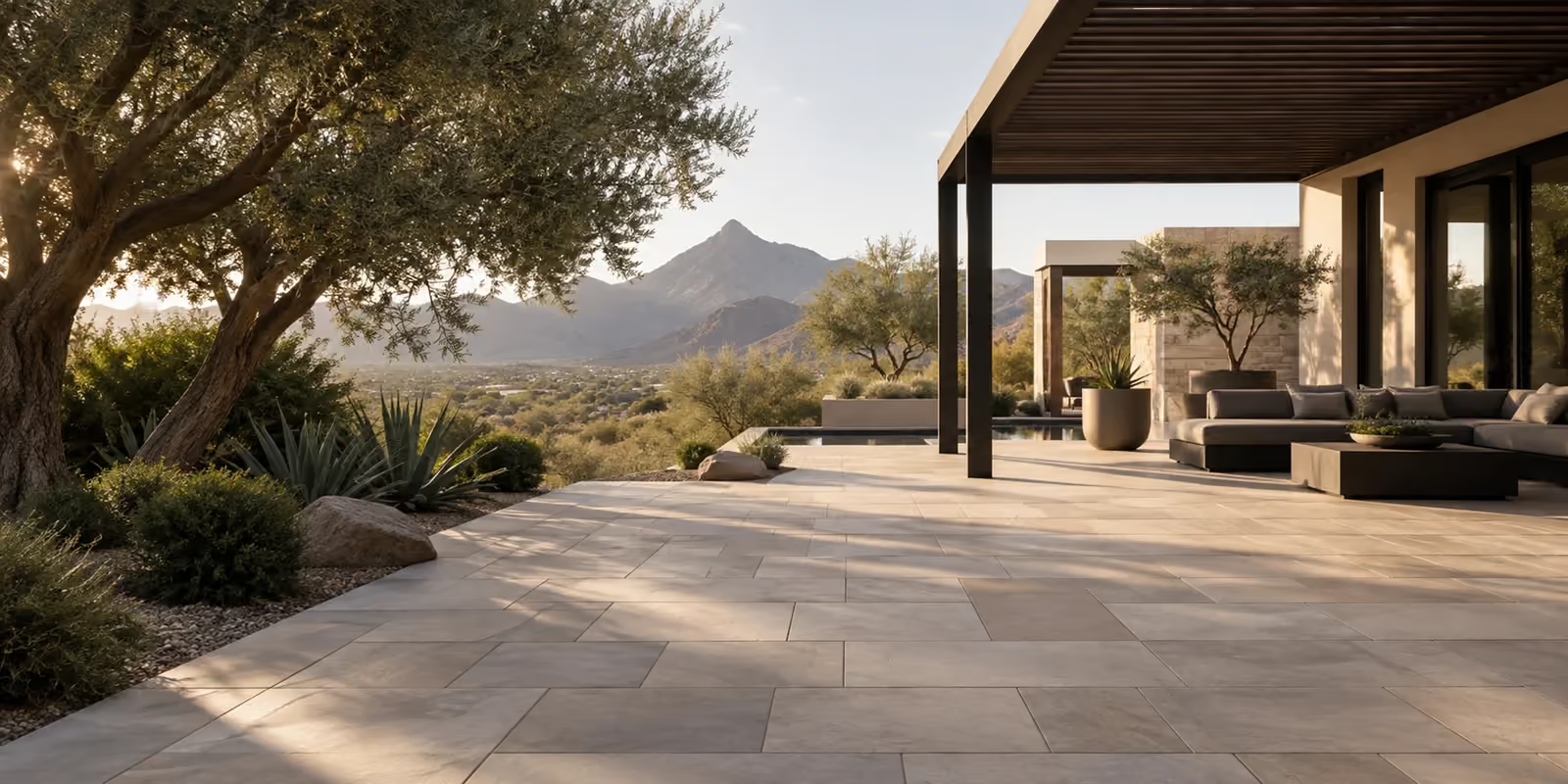
Bring the space together
Look at the whole composition: surface, architecture, planting and the places you want to spend time.
Illustrated design inspiration, not completed-project photography.Questions worth asking
Before the project begins.
How often should pavers be resealed?
The interval depends on product, substrate, exposure and use. Follow the selected product guidance and assess the existing finish rather than relying on one schedule for every surface.
Will sealing change the appearance?
It can. Test an inconspicuous area or sample to understand color enhancement and sheen before applying it across the entire surface.
Should every paver surface be sealed?
No. The need depends on the material, product, exposure and finish objective. Natural stone suppliers may recommend a suitable impregnator, while some outdoor porcelain does not require sealing. Confirm the actual product rather than treating all paving alike.
Will a sealer remove stains or stop settlement?
No. Stains need an appropriate cleaning assessment before treatment, and settlement requires repair or leveling. A sealer is not a replacement for either process.
Keep exploring
Connected decisions.
A good place to begin
Make room for
something beautiful.
Share your space, your ideas and the work you have in mind. Start with a project-specific conversation.
Request a free quote