
Turf
Artificial Grass for Lawns in Gilbert, AZ
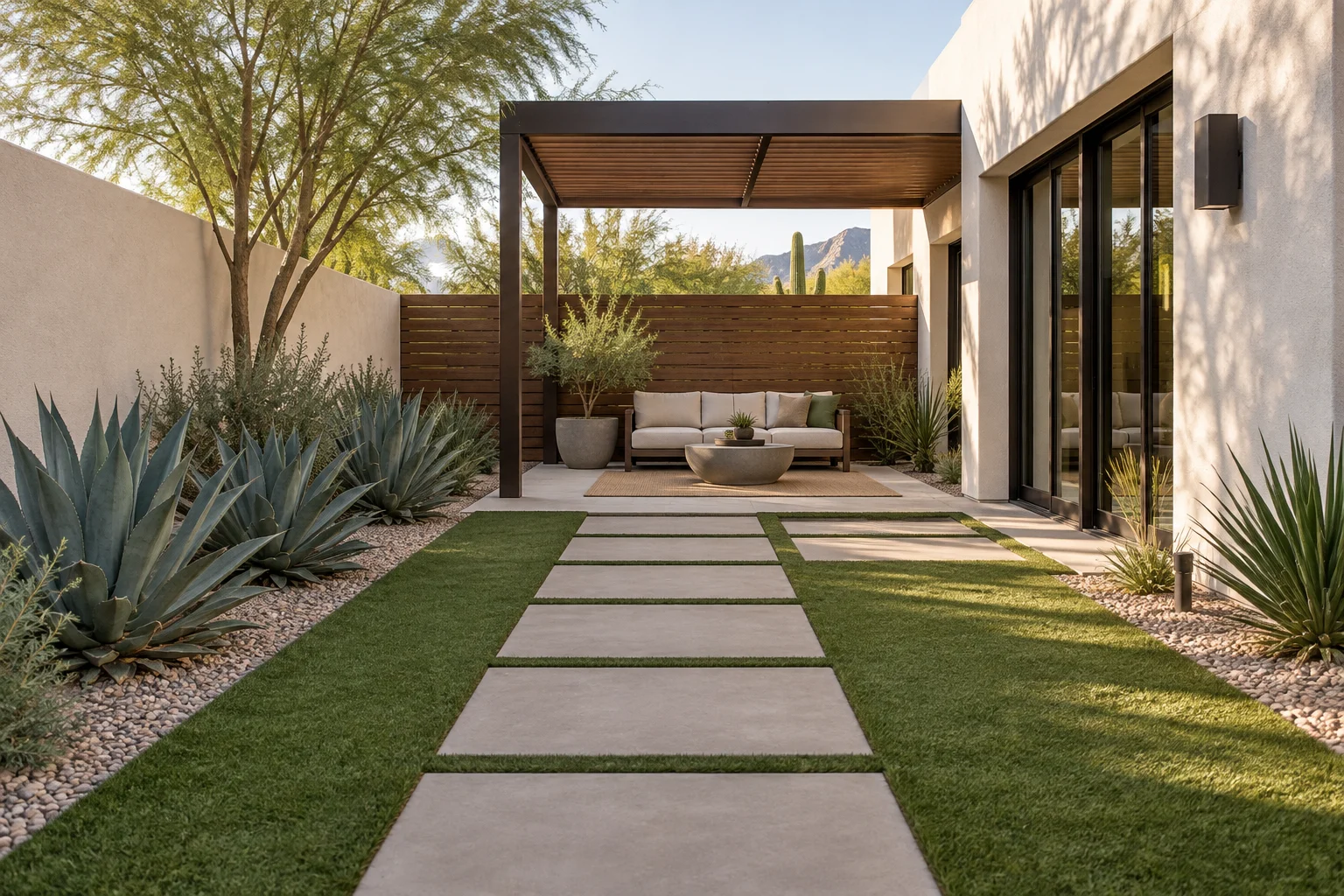
A consistent green surface can simplify the visual rhythm of a yard. The installation details make it practical.
Consider the details
An artificial lawn that fits the finished yard.
A consistent green surface can simplify the visual rhythm of a yard. The installation details make it practical.
Balance green space with usable paving
Map daily activity, walking routes and seating before setting the turf boundary. Surface temperature, irrigation changes and drainage deserve attention, even when watering needs are reduced.
Set a useful lawn boundary
Decide which area genuinely needs a green surface and how it relates to seating, planting and paving. Narrow leftover strips can be difficult to finish and maintain. Plan gate swings, bins and the routes used to reach equipment before cutting the shape. A simpler lawn perimeter can make the overall yard more usable without covering every available space.
Discuss removal, support and seams
Replacing natural grass is more than laying a carpet over the existing ground. Establish removal, base preparation, drainage, edging and how irrigation changes will be handled. Roll direction and seam positions affect appearance; ask how the layout will be arranged and secured. Door, patio and gravel transitions should be reviewed at their final elevations rather than left as finish-day decisions.
Know the care routine before choosing
A synthetic lawn still needs debris removal, brushing and occasional cleaning suitable for the product and use. Check sunny areas at the times you intend to use them and plan shade where practical. Keep furniture and heat sources within the manufacturer's guidance. Save the product and maintenance information so future repairs or cleaning do not depend on identifying a weathered sample.
Product and planning references
SYNLawn: artificial-grass care and maintenance ↗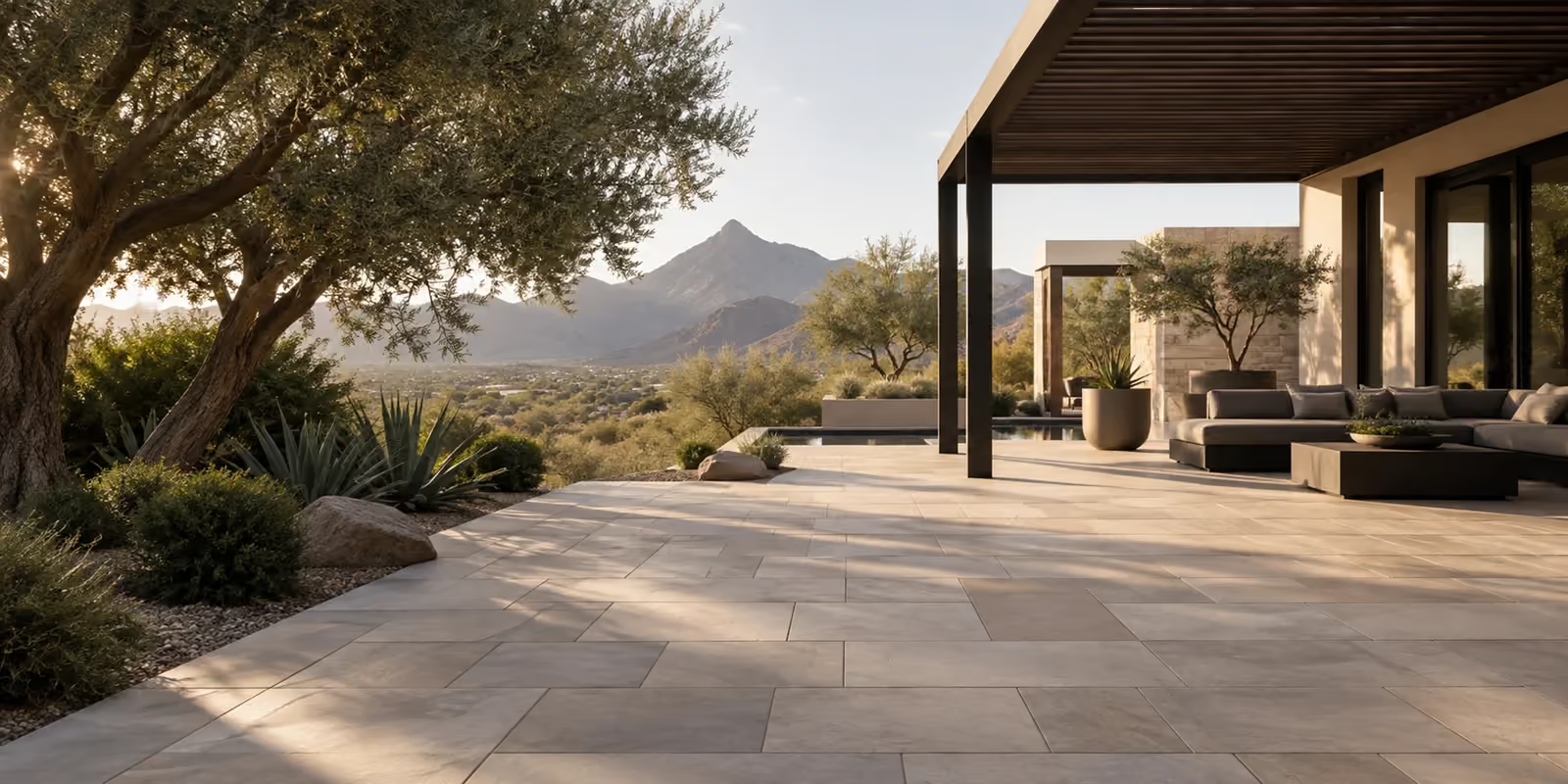
Bring the space together
Look at the whole composition: surface, architecture, planting and the places you want to spend time.
Illustrated design inspiration, not completed-project photography.Questions worth asking
Before the project begins.
Will lawn turf remove all watering?
It removes the need to irrigate grass growth, but cleaning and pet-use rinsing may still use water. Planting elsewhere in the yard may also retain irrigation.
Can a small lawn be combined with a larger patio?
Yes, if the edges, drainage and finished heights are coordinated. Plan the lawn footprint around actual use instead of treating it as the leftover area after paving.
Keep exploring
Connected decisions.
A good place to begin
Make room for
something beautiful.
Share your space, your ideas and the work you have in mind. Start with a project-specific conversation.
Request a free quote