
Guides
Planning a Paver Renovation
Compare cleaning, repair, resetting, overlays and full replacement based on what your existing surface actually needs.
Consider the details
Choose the remedy for the actual condition.
Compare cleaning, repair, resetting, overlays and full replacement based on what your existing surface actually needs.
Record the symptoms before selecting a remedy
List cracked units, rocking pavers, low areas, loose edges, damaged coating and persistent stains separately. Photograph drainage behavior after rain when useful. Identify the existing construction and any product or treatment records. A general description such as old patio does not explain whether the problem concerns appearance, support, water movement or all three.
Cleaning and sealing suit surface conditions
A sound surface may benefit from appropriate cleaning or a compatible finish treatment. Material identification comes first: acid-sensitive stone needs different care from concrete or outdoor porcelain. Cleaning cannot fix settlement, and sealing cannot make a cracked unit sound. Discuss test areas and realistic finish expectations rather than promising that every aged surface will look new.
Resetting and repair address movement or damage
Individual units may be replaceable, while a settled area may need lifting, support correction and reinstatement. Assess joints, edges and the route taken by water before deciding the area to open. Matching stock may be unavailable or look different beside weathered units. A broader reset or deliberate border change can be more coherent than repeated near-matching patches.
An overlay depends on the existing support
A concrete-to-paver renovation may retain a suitable slab under a specified assembly. Review condition, movement, drainage, added height and the product instructions before comparing savings. CMHA's concrete-overlay guide calls for project-specific design, not a universal retrofit detail. Door clearance, gates, garage approaches and pool-edge transitions can make an otherwise attractive overlay unsuitable.
Full removal gives a different starting point
Removal may be necessary where the support is unsound, the grade needs substantial change or finished height cannot be reconciled. It adds demolition, handling and disposal, but can allow a clearer rebuilding plan. Specify what is lifted, what can be reused and what preparation follows. Hidden conditions should have an agreed assessment and authorization process rather than an unexplained allowance.
Compare complete estimates and plan access
Ask each proposal to identify product, quantities, removal, support preparation, drainage, edging, joints and excluded specialist work. A surface-only price and a full rebuilding price are not comparable simply because they use the same square footage. Discuss staging, parking or garden access and the intended temporary condition if work is phased. Keep product records and spare units for future care and repairs.
Product and planning references
CMHA: concrete-paver overlay guide specification ↗MSI: Arterra porcelain installation guidelines ↗Techniseal: concrete-paver cleaning and sealing guidance ↗Natural Stone Institute: stone care and cleaning ↗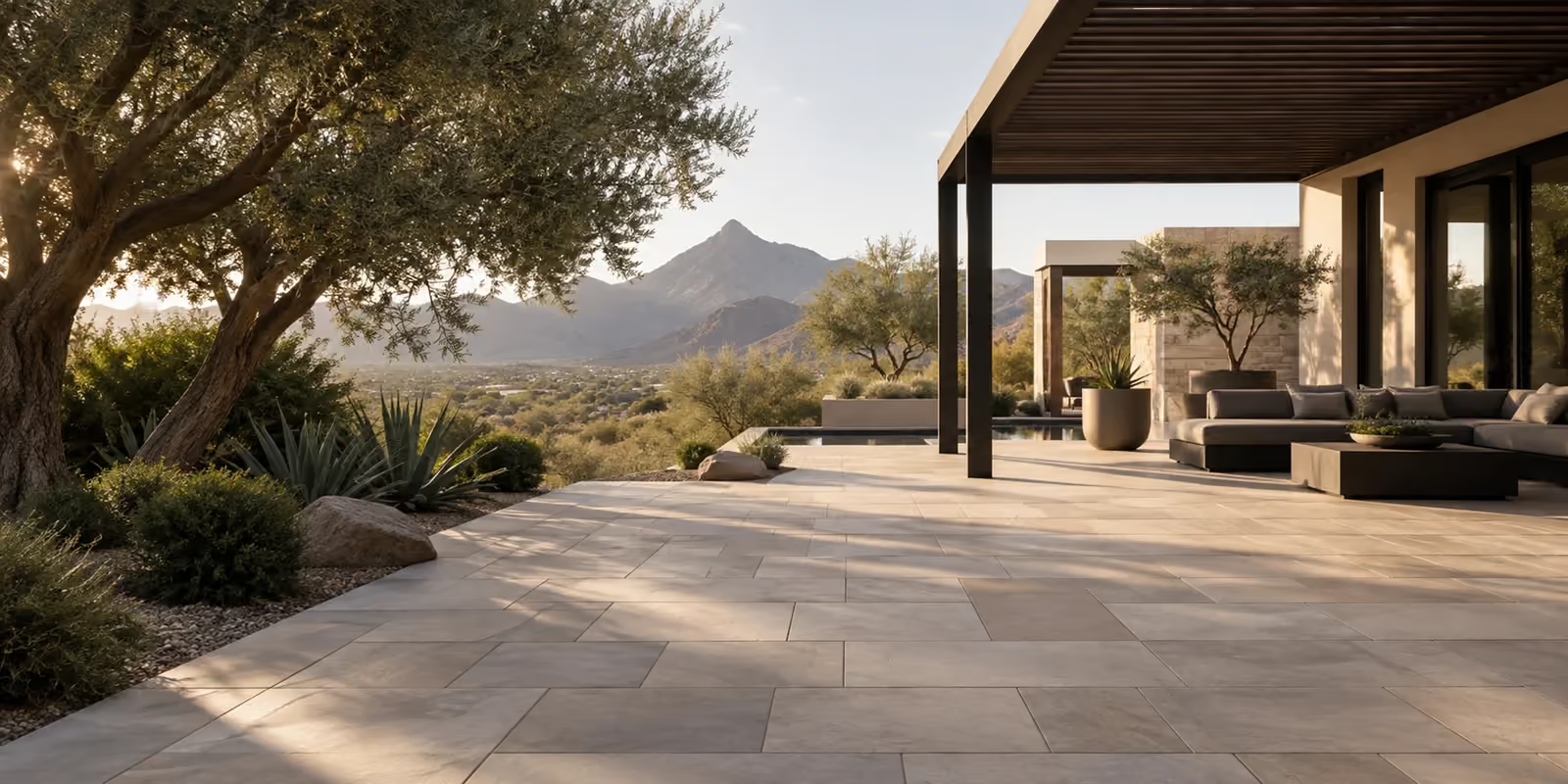
Bring the space together
Look at the whole composition: surface, architecture, planting and the places you want to spend time.
Illustrated design inspiration, not completed-project photography.Questions worth asking
Before the project begins.
Should old paving always be replaced?
No. The condition and desired result should guide the choice. Sound paving may need cleaning or a targeted repair, while support or drainage problems may justify a broader renovation.
Can an overlay avoid every removal cost?
Not necessarily. Assessments, support repairs, edges, clearance or drainage changes may still require removal in some areas. Compare the complete specified scope.
How can I compare renovation quotes fairly?
Check the same area, product and work items, including preparation, disposal, drainage and exclusions. A lower headline total may describe a different project.
Keep exploring
Connected decisions.
A good place to begin
Make room for
something beautiful.
Share your space, your ideas and the work you have in mind. Start with a project-specific conversation.
Request a free quote