
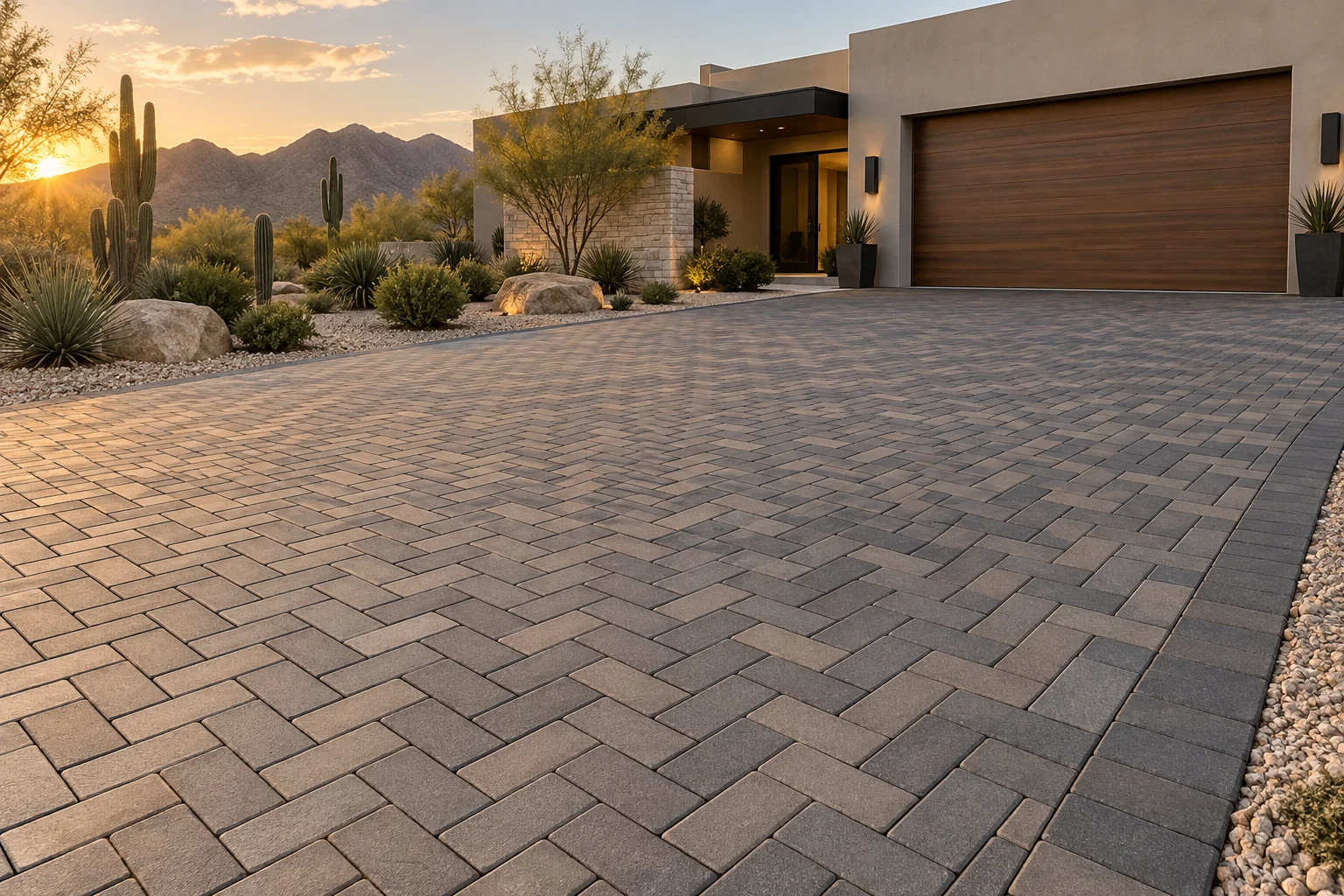
Pavers are individual units used to form an outdoor surface. They can create patios, driveways, paths and pool surrounds, but the unit alone is not the whole pavement. The base, setting method, joints, edges and drainage help determine how the finished surface performs.
Pavers versus a continuous slab
A poured concrete surface is formed as a continuous slab with its own support and joints. A paved surface is assembled from individual units. That can create different pattern choices and repair options, but it does not make the supporting construction unimportant. Individual units still need a suitable assembly, and replacing one later may be limited by matching availability or weathering.
The main material families
Concrete pavers are manufactured units with a range of formats and finishes. Clay paving brick is a different material, even when a concrete unit has a similar rectangular shape. Natural stone can include travertine, limestone and other supplied selections; its properties vary by variety and finish. Exterior porcelain is a manufactured ceramic product with its own application and installation guidance. The actual product matters more than the broad category name.
Match the product to its use
A driveway needs a vehicle-suitable product and support. A patio needs a practical footprint for furniture and circulation. Poolside use adds wet-surface and coping questions. A large decorative slab is not automatically a driveway unit, and indoor stone or tile is not automatically an outdoor paver. Ask for the intended application and installation detail before choosing solely by appearance.
What sits beneath the surface
Sand-set interlocking pavement generally combines prepared ground, base, bedding, units, joints and restraint. A bonded or product-specific porcelain assembly can use different details. There is no single depth, joint material or installation recipe for every unit and ground condition. CMHA's concrete-overlay guide is an example of project-specific specification, not permission to cover any existing slab without assessment.
Patterns and borders change the composition
Herringbone, running bond, basketweave and mixed-size patterns use the units differently. Product dimensions and modular quantities affect cuts and layout. A contrasting border can frame an area, but the finish must still meet doors, drains and adjoining surfaces properly. Sketch the usable footprint and furniture or vehicles before deciding a decorative pattern.
Maintenance is material-specific
Joint condition, debris, spills and any existing coating need suitable care. Limestone and travertine are acid-sensitive; generic acidic cleaners can damage them. Some exterior porcelain does not require sealing, while other surfaces may be considered for compatible treatments. No sealer fixes an unstable base or makes a surface universally stain-proof. Keep the product and care information with the installation record.
A useful starting point for your project
Describe the current surface, intended use and approximate dimensions. Compare samples in the space and ask what the estimate includes beneath the finish. For an older area, first decide whether cleaning, a targeted repair, resetting, an overlay or full replacement addresses the problem. The right choice begins with the property, not a universal claim about the best paving material.
Explore the next decision
Paver Design & Installation. Choosing Paver Materials for Arizona. Planning a Paver Renovation.